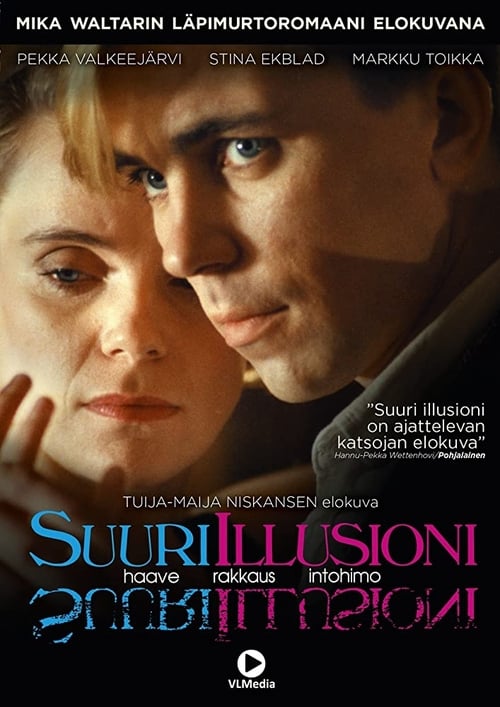
Suuri illusioni
1985
No user ratings available yet
Representation score: 2.7 out of 10

Representation Score
Fair
1978
Director
Jaakko Pakkasvirta
Runtime
105 minutes
Average Rating
No ratings yetNew Showbiz Analysis
Poet and Muse is a high-production biographical drama that prioritizes the intellectual depth of its historical figures. It succeeds in complicating the traditional biopic by giving significant weight to the female poets and partners who shaped the protagonist's life. However, the film is inherently limited by its period setting. The focus on the Finnish cultural elite results in a monocultural environment that lacks racial or ethnic variety. The storytelling also adheres to a traditional romantic structure without exploring queer subtext. Ultimately, the film serves as a character-driven study of national identity, balancing the roles of its female leads against the demographic constraints of early 1900s Finland.
Category Breakdown
The film focuses on the romantic and intellectual connections between Eino Leino and the women in his life. There is no indication of non-straight relationships or queer undertones in this traditional romantic framework.
Women like L. Onerva are portrayed as central, driving intellectual forces rather than passive muses. This approach challenges the typical 'great man' narrative by giving significant roles to female characters.
Set in early 20th-century Finland, the film reflects the homogeneous demographics of its time. It focuses on the Finnish cultural elite within a largely monocultural social environment.
The story explores the tension between individual artistic expression and Finnish societal expectations. It celebrates national cultural heritage while focusing on the subjective lives of cultural icons.
There is no documented evidence regarding the portrayal of physical or neurodivergent disabilities in this production.
Present on Screen
Limited or Absent
Official Synopsis
Semi-fictitious biopic of Finnish poet Eino Leino, made with a large budget to celebrate the 100th anniversary of his birth. The film concentrates on his relationships with first wife Freya Schoultz and later muse, poetess L. Onerva. His friends include equally central figures of the Finnish cultural scene in the early 1900s, such as painters Halonen and Gallén-Kallela, and composer Sibelius.
1985
1964
2020

1983

2006
1996
2002
2008
No reviews yet. Be the first to share your thoughts on this movie!
Use the rating form above to leave a star rating and optional review.