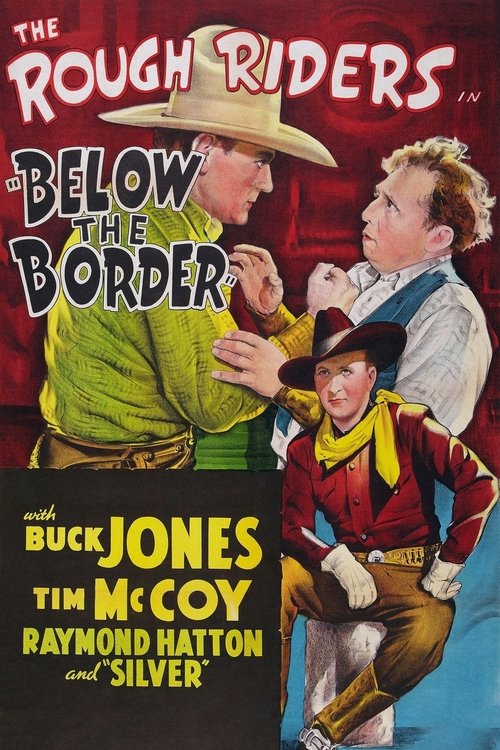
Below the Border
1942
No user ratings available yet
Representation score: 1.2 out of 10

Representation Score
Minimal
1945
ApprovedDirector
Howard Bretherton
Runtime
56 minutes
Average Rating
No ratings yetNew Showbiz Analysis
The Navajo Trail opens with the standard low-budget B-movie aesthetic of 1945 Monogram Pictures, establishing a desert landscape that serves as a neutral stage for white conflict. The film’s argument is straightforward: the U.S. Marshal is the natural arbiter of justice in the West, and order is restored when the "deviant" outlaws are removed. The sold meaning is that the competent, attractive white male protects the passive, attractive white female from degenerate, greedy white males, with the woman serving as the prize for the winner. The film’s internal logic is consistent with its era, treating the Navajo as a plot device for stolen horses rather than as agents with agency. The hero’s authority is unquestioned, representing the law and order of the settler society. The "Navajo" element is a backdrop for the white-on-white conflict, with any indigenous presence serving as a neutral witness to the hero’s justice. There is no white guilt or critique of colonization; the hero is the embodiment of the nation’s expansion and order. The ending reinforces this hierarchy, with the villains defeated and the heroes intact. The camera loves the hero’s confident posture and the woman’s distressed but beautiful face, while the villains are shown in moments of failure. The film’s moral verdict is clear: the white male hero is the natural arbiter of justice in the West, and "civilization" must defeat "savagery." The last image is a standard restoration of order, with the hero and woman together, symbolizing the triumph of order and family over chaos.
Category Breakdown
No same-sex intimacy or non-heteronormative identities appear on screen. The narrative relies exclusively on heterosexual romance between the marshal and the female lead.
Jennifer Holt’s Mary Trevor serves as the passive prize for the hero’s victory, valued for her beauty and need for rescue. Johnny Mack Brown is the unmarked competent center, while Raymond Hatton’s sidekick provides comic ineptitude to highlight the hero’s agility.
The Navajo are a plot device for stolen horses, not agents with agency or dialogue. The cast is entirely white; the indigenous setting remains a neutral backdrop for the white-on-white conflict between marshals and outlaws.
The U.S. Marshal represents legitimate state authority, restoring peace to the frontier. The film treats the law and the white male hero as the natural arbiters of justice, with the "Navajo Trail" serving merely as terrain to be secured.
No characters are depicted with physical or cognitive impairments. The bodies on screen are idealized for action or used for comic effect, with no focus on disability or medical conditions.
Present on Screen
Limited or Absent
Official Synopsis
U.S. Marshals Nevada Jack McKenzie and Sandy Hopkins are working undercover to capture a gang stealing horses from the Navajos, and to capture the killer of a Ranger. Nevada poses as an outlaw to get in with the gang and find the leader, while Sandy pretends to be a drunken old horse thief that has knowledge of where the Navajos have hidden their ponies.
1942
1942
1942
1946
1948
1942
1941
1944
No reviews yet. Be the first to share your thoughts on this movie!
Use the rating form above to leave a star rating and optional review.