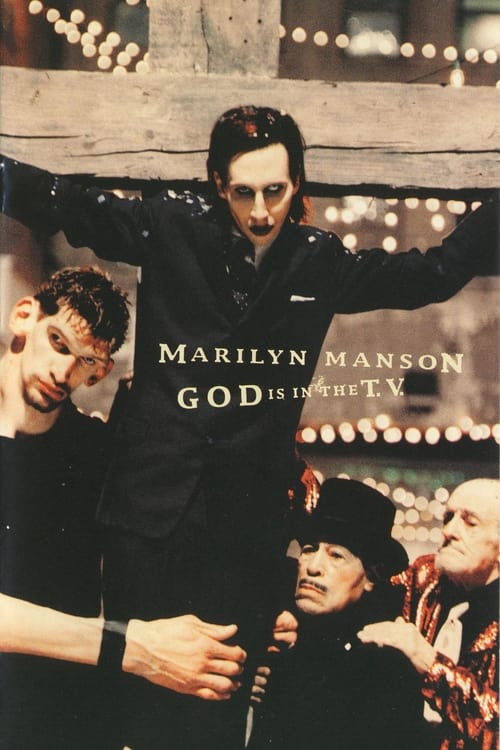
Marilyn Manson: God Is In the TV
1999
No user ratings available yet
Representation score: 8.2 out of 10

Representation Score
Good
1991
NRDirector
Ray Agony, Tamra Davis, Todd Haynes, Richard Kern, David Markey, Thurston Moore, Phil Morrison, Tony Oursler, Steve Shelley
Runtime
53 minutes
Average Rating
No ratings yetNew Showbiz Analysis
Goo stands as a key piece of early 90s counter-culture, prioritizing stylistic rebellion over traditional narrative stability. Its strength lies in rejecting mainstream commercial polish and embracing a decentralized, communal creative process. The film's diversity is rooted in its creative pedigree, introducing avant-garde filmmakers and challenging conventional social norms. However, while it avoids mainstream homogeneity, it lacks explicit evidence of diverse racial representation.
Category Breakdown
Directors like Todd Haynes bring a queer aesthetic to the film, using experimental visuals to challenge traditional gender roles and disrupt conventional language.
The film's underground roots challenge traditional gender hierarchies. It avoids mainstream commercial clichés, focusing instead on a deconstructed view of identity.
While the film experiments with alternative subcultures, there is no documented evidence of a non-white majority cast.
The film adopts a postmodern, anti-institutional style. Its decentralized, communal creative process critiques traditional Western media structures through abrasive storytelling.
There is no verifiable evidence of physical or neurodivergent disabilities being portrayed in the film. Disability is not used as a central plot device or for mockery.
Present on Screen
Limited or Absent
Official Synopsis
In 1991, a long-form music video version of Goo was released on VHS and LaserDisc. A music video for each song from the album was included; the track listing was identical to that of the original album.
1999

1981

2004

1997

1966
1986
1986

1986
No reviews yet. Be the first to share your thoughts on this movie!
Use the rating form above to leave a star rating and optional review.