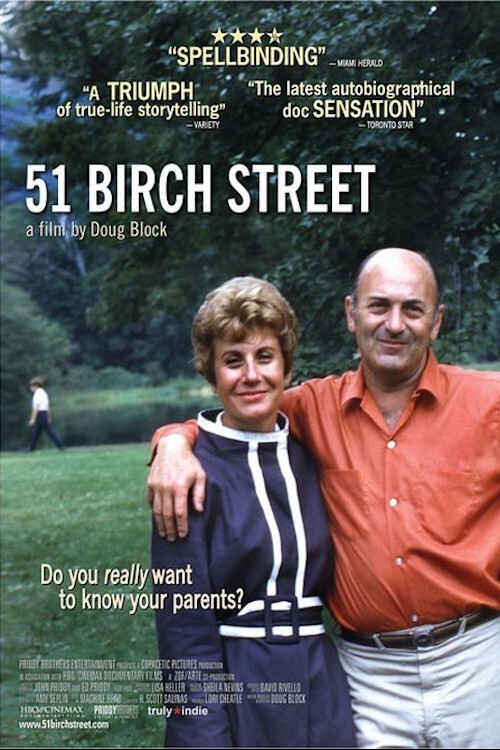
51 Birch Street
2006
No user ratings available yet
Representation score: 1.9 out of 10
Representation Score
Good
2010
Director
Doug Block
Runtime
90 minutes
Average Rating
No ratings yetNew Showbiz Analysis
Doug Block’s documentary provides an intimate, personal perspective on the transition from childhood to adulthood. By centering the female experience and exploring the complexities of modern parenting and identity, it offers a nuanced look at family dynamics. However, its narrow focus on a specific family limits its broader relevance to diverse social identities. Despite this, the film effectively captures the subjective truths of family life without resorting to moralistic clichés.
Category Breakdown
The film focuses on a typical coming-of-age journey, lacking explicit queer narratives or non-straight representations. It centers on a specific family's experiences rather than diverse LGBTQ+ identities.
The narrative emphasizes the daughter's role as the primary driver of the film's emotional arc, highlighting her ability to act and emotional depth. It avoids passive female stereotypes by showcasing her active involvement.
The film concentrates on the dynamics within a specific family, avoiding overt stereotypes but maintaining a narrow focus on a particular socioeconomic and ethnic background.
The documentary uses a fly-on-the-wall approach to explore the breakdown of traditional family structures. It depicts youthful rebellion as a necessary challenge to parental authority.
There is no indication of visible or invisible disabilities being represented in the film.
Present on Screen
Limited or Absent
Official Synopsis
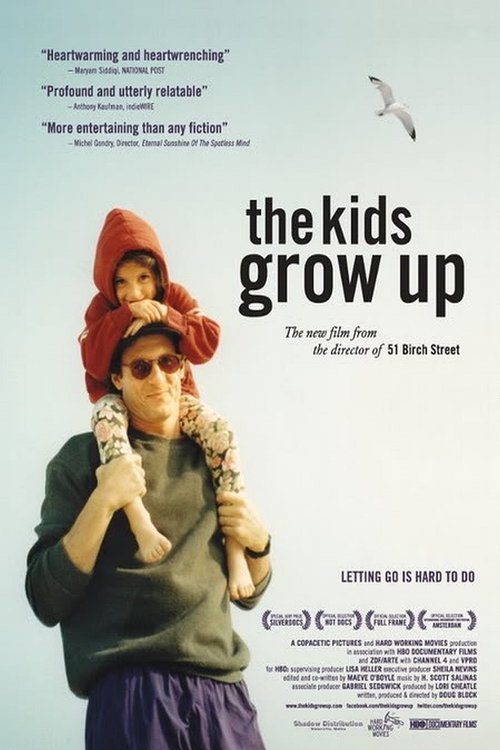
In his 51 BIRCH STREET, one of the most highly praised personal documentaries of recent years, Doug Block took a hard look at his parents marriage and his own relationship with his father. With his latest film, Block turns in the other direction, offering an exceptionally moving film about his relationship with his only child, Lucy. THE KIDS GROW UP is a chronicle of Lucy's emotionally-fraught last year at home before leaving for college. Moving fluidly between past, present and the fast-approaching future, Block uses a lifetime of footage to craft not only a loving portrait of a girl transitioning into womanhood, but also an incredibly candid look at modern-day parenting, marriage, and what it means to let go.
2006

2010

2021
2008

2010

2020

2022

2016
No reviews yet. Be the first to share your thoughts on this movie!
Use the rating form above to leave a star rating and optional review.