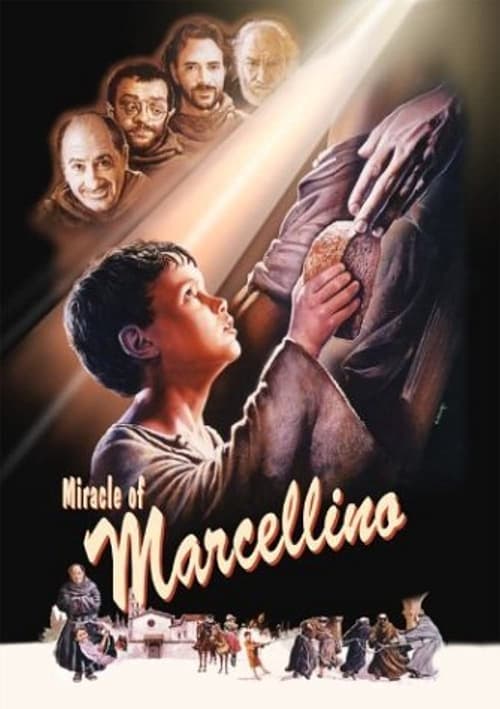
Miracle of Marcellino
1991
No user ratings available yet
Diversity score: 2.2 out of 10

1980
Director
Luigi Comencini
Runtime
110 minutes
Average Rating
No ratings yetSynopsis
The film begins when Eugenio, a 14 year old child, is conduced from his grandparents home outside Rome, to Giancarlo (his father) in the city, by Giancarlo's friend (called "Moustache"). As Eugenio is bothering Moustache, he threatens Eugenio with leaving him in the middle of the country. He finally does it. When Giancarlo finds out, they return for Eugenio, but he is now lost. Meanwhile we're told the story of the child and his relation with the family, and why he feels unwanted.
Overall Score
Limited
Category Breakdown
LGBTQ+ Representation
The film offers no visible LGBTQ+ characters or narratives. It focuses on traditional, fractured familial and institutional structures without engaging with queer identities.
Gender Representation
The story centers on male-dominated hierarchies and patriarchal family dynamics. While the protagonist resists authority, the lens remains largely traditional, focusing on male figures like priests and fathers.
Racial & Ethnic Diversity
The cast is ethnically homogeneous, reflecting the mid-century Italian setting. The film does not use diverse casting to challenge the demographic realities of the era.
Religious & Cultural Diversity
The film provides a strong critique of totalitarianism and religious institutions. It frames the struggle for individual autonomy against oppressive state and educational systems as a central theme.
Disability Representation
There is no significant portrayal of characters with visible or invisible disabilities. The narrative prioritizes the protagonist's social and psychological displacement over neurodivergence or physical disability.
Strengths
Areas for Improvement
AI Analysis
Voltati Eugenio is a period drama that uses the 1940s Fascist era to examine the friction between individual autonomy and systemic authority. While the film lacks demographic diversity, it finds strength in its intellectual subversion of power structures. The narrative succeeds by deconstructing the stability of traditional social hierarchies. It portrays the protagonist's resistance to institutional order not as delinquency, but as a necessary fight for selfhood. However, the film remains limited by its traditional casting and focus on male-centric power dynamics. It offers little representation for LGBTQ+ identities, racial diversity, or disability.
1991

1973
2017
2001

1992

2017
2016
2009

2011
1989
1962

2015
No reviews yet. Be the first to share your thoughts on this movie!
Use the rating form above to leave a star rating and optional review.