Hearts in Exile
1915
No user ratings available yet
Representation score: 2.6 out of 10
Representation Score
Limited
1921
NRDirector
D.W. Griffith
Runtime
150 minutes
Average Rating
No ratings yetNew Showbiz Analysis
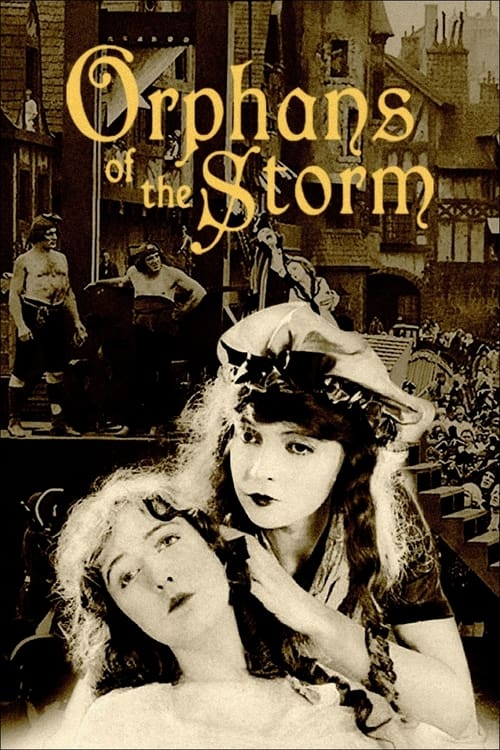
Orphans of the Storm is a traditional historical epic that emphasizes the restoration of social order. While it centers on female protagonists, their influence is often overshadowed by the violent, male-dominated political upheaval of the revolution. The film reinforces conservative social hierarchies, viewing the Reign of Terror as a period of moral instability and mob violence, presenting social change as a chaotic disruption.
Category Breakdown
The film does not depict any non-straight or non-cisgender identities. Same-sex relationships and intimate moments between characters of diverse genders are entirely absent, adhering to the historical context and production era.
Female characters Louise and Josephine play key roles in driving the narrative. However, their influence is often constrained by a male-dominated political environment where men hold the reins of power.
The cast is predominantly white European, reflecting the racial norms of early 20th-century Hollywood and the historical interpretation of the French Revolution.
The film portrays the French Revolution as a descent into lawlessness, emphasizing the importance of family and religious institutions as stabilizing forces during times of moral instability.
Louise's blindness is a central plot point, serving as a catalyst for the sisters' separation. The depiction focuses on disability as a narrative obstacle rather than a nuanced exploration of the experience.
Present on Screen
Limited or Absent
Official Synopsis
France, on the eve of the French Revolution. Henriette and Louise have been raised together as sisters. When the plague that takes their parents' lives causes Louise's blindness, they decide to travel to Paris in search of a cure, but they separate when a lustful aristocrat crosses their path.
1915
1916
1958
1994
1932
1919
2001
1920
No reviews yet. Be the first to share your thoughts on this movie!
Use the rating form above to leave a star rating and optional review.