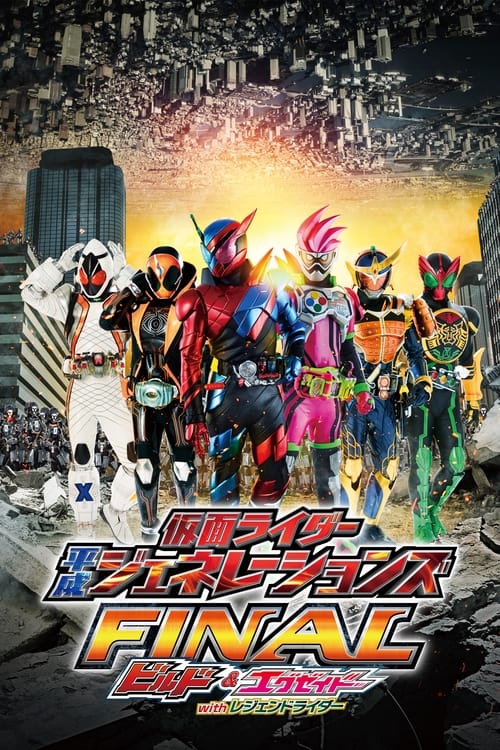
Kamen Rider Heisei Generations FINAL: Build & Ex-Aid with Legend Riders
2017
No user ratings available yet
Representation score: 3.5 out of 10

Representation Score
Limited
2018
Director
Nobuhiro Suzumura
Runtime
60 minutes
Average Rating
No ratings yetNew Showbiz Analysis
This production is a genre-specific action film that emphasizes traditional male clichés and localized storytelling. It expands an existing mythos without broad social commentary. The film earns credit for its postmodern exploration of morality and institutional authority. The antagonist's pursuit of godhood provides a critique of social and biological hierarchies. However, the film remains limited by its demographic homogeneity. The focus on combat and masculine competition results in a lack of diverse representation and minimal engagement with female or non-assuming gender matches what was assigned at birth perspectives.
Category Breakdown
The film does not include explicit representations of LGBTQ+ identities or same-sex relationships. Character interactions revolve around traditional masculinity, making it difficult to find queer subtext.
The film features a predominantly male cast focused on masculine power and combat. Female characters are not present, and there are no female-driven plotlines or challenges to traditional gender roles.
The cast is ethnically uniform, reflecting the cultural origins of the Tokusatsu genre. The story stays within a localized context without addressing broader racial diversity.
The story explores moral relativism through a character seeking self-defined 'godhood.' Using a postmodern perspective, it blurs the lines between reality and digital simulation.
The film includes biological digital afflictions but does not focus on the lived experiences of disability. Characters are defined by their roles as gamers or doctors, not by their disabilities.
Present on Screen
Limited or Absent
Official Synopsis
Final installment of the V-Cinema Kamen Rider Ex-Aid Trilogy: Another Ending will focus on the characters of Kuroto Dan (Kamen Rider Genm) and Kiriya Kujo (Kamen Rider Lazer). Genm has awoken! Kuroto Dan has obtained the God Maximum Mighty X and the world falls into the chaos that is Zombie Chronicle. Kiriya has found the key to face the power that not even Muteki can overcome and after receiving a certain message from Masamune, he faces Genm. What will become of these two and of the world?
2017

2021
2010
2010
2016
2013
2017
2014
No reviews yet. Be the first to share your thoughts on this movie!
Use the rating form above to leave a star rating and optional review.