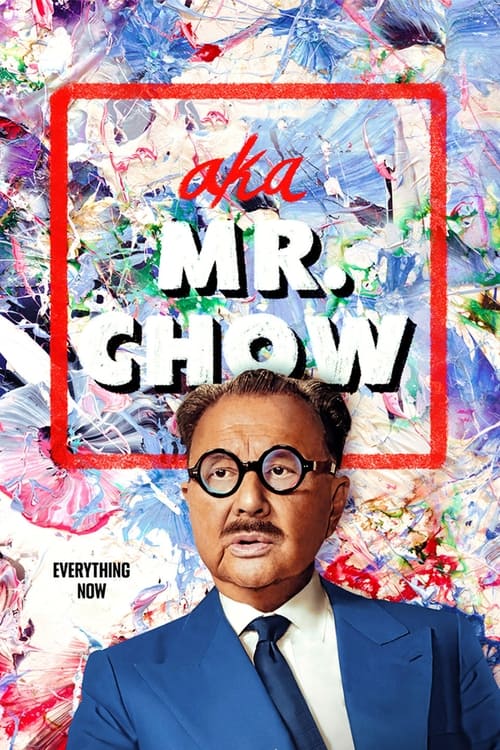
aka Mr. Chow
2023
No user ratings available yet
Diversity score: 6.8 out of 10
No Poster Available
2015
Director
Mark Rappaport
Runtime
33 minutes
Average Rating
No ratings yetSynopsis
The great French actor, Marcel Dalio, who has the lead role in Jean Renoir's THE RULES OF THE GAME, also appears in Renoir's GRAND ILLUSION. In both films he plays a character who is Jewish, as Dalio was in real life. In fact, in most of the French films he's in the 1930s, he almost always plays shady characters, informers, blackmailers and gangsters. In other words, he is always "the Jew." When the Nazis invaded France in 1940, he fled to America and appeared in CASABLANCA and TO HAVE AND HAVE NOT. In America, he was no longer the Jew but The Frenchman. He became, in dozens of films, America's idea of a typical Frenchman. His film career has these two strands in which he has two different identities. Are you defined by other people and their perceptions of who you are? Are you always a creation of the way people want to see you? Or can you exist outside of the arbitrary boundaries which are placed on you?
Overall Score
Good
Category Breakdown
LGBTQ+ Representation
The film explores the fluidity of self and the performative nature of identity. While it lacks specific queer characters, its inquiry into arbitrary social boundaries aligns with queer theoretical frameworks.
Gender Representation
The narrative focuses on a male subject and the sociological impact of ethnic stereotyping. It does not actively subvert gender hierarchies or center on female agency.
Racial & Ethnic Diversity
The documentary provides a sophisticated critique of ethnic pigeonholing. It examines how Dalio was cast as a 'shady' Jewish archetype in France before being re-coded as a generic Frenchman in Hollywood.
Religious & Cultural Diversity
The film challenges the 'truth' of identity by critiquing how media institutions manufacture cultural shorthand. It deconstructs how Western industries consume and utilize the 'other' through historical archetypes.
Disability Representation
There is no evidence of characters or subjects portraying physical or neurodivergent disabilities within the film.
Strengths
Areas for Improvement
AI Analysis
The documentary excels as a semiotic investigation into how ethnic and national identities are performed. It offers a profound study of the immigrant experience and the mechanics of racialized casting by tracing Marcel Dalio's transition between two distinct cinematic identities. However, the film's narrow focus on a single male subject limits its engagement with gendered power dynamics. It lacks specific depictions of LGBTQ+ identities or characters with disabilities, making the representation somewhat specialized rather than broad. Ultimately, the film's strength lies in its intellectual deconstruction of systemic stereotypes. It moves beyond simple biography to critique how dominant cultural institutions flatten complex human identities into digestible tropes.
2023
1969

2015

2019

2016

2016
2013

2019

2021
2014

2009

2008
No reviews yet. Be the first to share your thoughts on this movie!
Use the rating form above to leave a star rating and optional review.