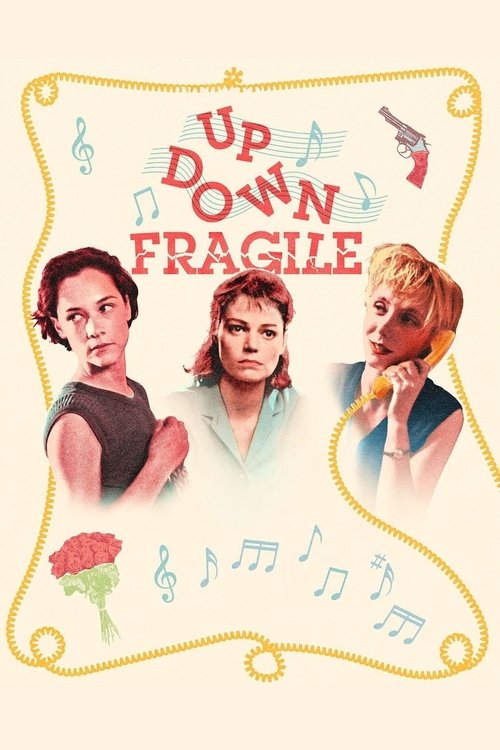
Up, Down, Fragile
1995
No user ratings available yet
Representation score: 7.9 out of 10

Representation Score
Good
2001
PG-13Director
Jacques Rivette
Runtime
154 minutes
Average Rating
No ratings yetNew Showbiz Analysis
Jacques Rivette’s *Va Savoir* succeeds in subverting traditional social hierarchies, particularly regarding gender and sexual fluidity. By placing women in positions of intellectual ability to act and presenting interpersonal connections as non-prescriptive, the film avoids many conventional clichés. However, the film’s scope is limited by its narrow focus on a specific Parisian artistic class. This results in a lack of racial, ethnic, and disability representation, making the social world feel somewhat insulated and homogeneous. Ultimately, the film is a study of postmodern subjectivity. It trades institutional or diverse representation for a nuanced exploration of personal truth and shifting power dynamics within a specialized social strata.
Category Breakdown
The film portrays a social environment where attraction and identity are fluid rather than strictly heterosexual. Although there isn't a central LGBTQ+ character, the film avoids using negative language and rigid sexual hierarchies.
Female characters such as Camille play significant roles in the intellectual and artistic spheres. The film explores female desire and professional identity, challenging traditional patriarchal structures and male dominance.
The cast is predominantly white, reflecting a specific Parisian intellectual community. While it avoids harmful stereotypes, the narrative lacks significant racial or ethnic diversity beyond this particular socioeconomic group.
The narrative emphasizes subjective experiences and secular, artistic pursuits over organized religion or patriotism. It questions absolute truths by focusing on the subjectivity of memory and performance.
There are no characters with visible or invisible disabilities in the film. It does not use disability as a plot device, but it lacks representation for neurodivergent or physically disabled individuals.
Present on Screen
Limited or Absent
Official Synopsis
After finding love and success in Italy, French actress Camille returns to Paris, the city she fled three years ago. She secretly dreads confronting her ex-boyfriend Pierre. Her new lover Ugo also has a secret, as he’s meeting with the intriguing Dominique while on his quest for an unpublished manuscript.
1995

1997

1984

1977
1981
2018

1999

1998
No reviews yet. Be the first to share your thoughts on this movie!
Use the rating form above to leave a star rating and optional review.