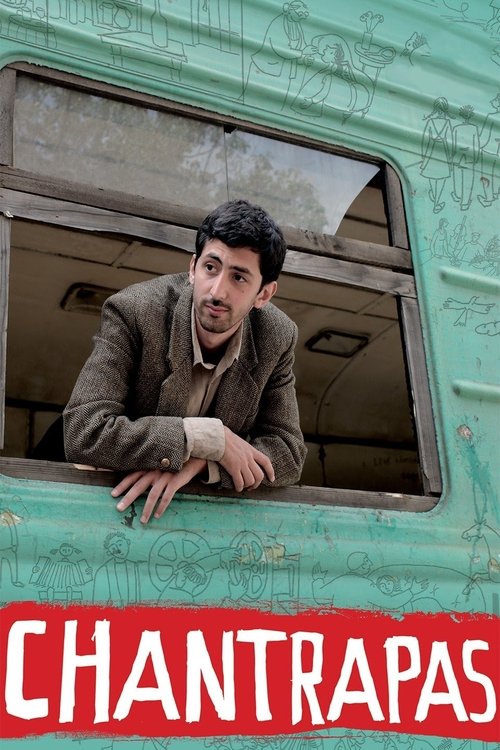
Chantrapas
2011
No user ratings available yet
Representation score: 5.5 out of 10
Representation Score
Limited
1993
Director
Jean-Luc Godard
Runtime
58 minutes
Average Rating
No ratings yetNew Showbiz Analysis
The film opens with a grainy, black-and-white close-up that immediately rejects linear narrative in favor of fragmented memory. Jean-Luc Godard, playing Prince Mishkin, casts himself as the naive observer in a world he is critiquing, while László Szabó plays a Hollywood producer. This self-referential setup frames the film as a philosophical treatise on cinema and history rather than a conventional drama. The camera lingers on the textures of the past—old photographs, newsreels, and the faces of historical figures—treating memory as a sacred object. The "handsome" are not the young leads but the aged, the historical, the ones who have survived time. The film’s argument is that truth is not a single, coherent narrative but a collection of fragments that must be pieced together. It challenges the viewer to confront the disjointed nature of the past, punishing the expectation of a conventional ending. The last image is a lingering, static shot that emphasizes the emptiness of the space or the silence of the characters, rewarding the viewer’s patience with the aesthetic of decay and the weight of history. The film’s cultural critique is sharp, deconstructing Western cinematic traditions and national identities through fragmentation and historical collage. However, its engagement with gender, race, and disability is limited, reflecting its specific focus on historical and cinematic theory. The film’s moral verdict is that history must be understood in its complexity, and that the viewer’s confusion is the punchline.
Category Breakdown
No queer figures appear. The film’s focus on historical and cinematic theory leaves no room for sexual orientation as a narrative element.
Women appear as historical avatars like Anna Karenina rather than active agents. The narrative voice and intellectual authority remain exclusively male, with Godard and Szabó driving the arguments.
The cast is predominantly white European, reflecting the film’s focus on French and Russian cultural history. Non-white characters are absent, and the narrative does not engage with racial dynamics.
The film actively deconstructs Western cinematic traditions and national identities through fragmentation and historical collage. It treats nation, history, and art as contested, layered concepts rather than fixed truths.
No characters with physical, sensory, or cognitive disabilities are depicted. The film’s engagement with the body is purely aesthetic and historical, not personal or medical.
Present on Screen
Limited or Absent
Official Synopsis
A famous French filmmaker is hired by a major Hollywood producer to make a documentary on the state of post-Cold War Russia. The filmmaker, though, subverts the project by stubbornly remaining in France and casting himself as the title character of Dostoyevsky's "The Idiot," offering up a series of typically Godardian musings on art, politics, the nature of images and the future of cinema.
2011
1979
2000
1963

2010
2005
1984
1987
No reviews yet. Be the first to share your thoughts on this movie!
Use the rating form above to leave a star rating and optional review.