
Puccini for Beginners
2006
No user ratings available yet
Representation score: 8.5 out of 10
Representation Score
Excellent
1996
RDirector
Mark Joffe
Runtime
102 minutes
Average Rating
No ratings yetNew Showbiz Analysis
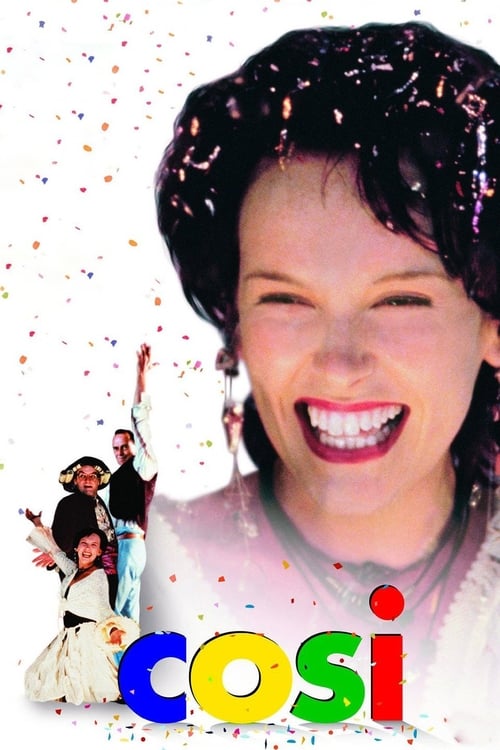
Cosi is a powerful work of empathetic realism that prioritizes the voices of the institutionalized. It excels by grounding its drama in the raw realities of disability and queer identity, moving beyond superficial representation to explore deep systemic crises. However, the film's impact is somewhat limited by its demographic focus. The narrative remains centered on a homogeneous social group, lacking the racial diversity needed for a more inclusive perspective. Ultimately, the film's strength lies in its ability to disrupt conventional hierarchies. By focusing on the real-life experiences of underrepresented individuals, it creates a sophisticated critique of the indifference found in mid-90s institutional structures.
Category Breakdown
The film explores the HIV/AIDS crisis through the character of Roy, offering a nuanced look at queer vulnerability and mortality. This focus disrupts assumptions about straight relationships by emphasizing identity and intimacy during a systemic crisis.
The narrative is dominated by male perspectives and emotional bonds, though it avoids traditional stoic masculinity by highlighting fragility. Female characters primarily support the central male-driven storyline.
The cast reflects a relatively homogeneous social group typical of a mid-90s Sydney setting. While it avoids stereotypes, it does not actively include diverse ethnic representation to challenge the status quo.
The story critiques institutional indifference, prioritizing the lived experiences of patients over rigid social or religious doctrines. It emphasizes shared humanity and dismantles traditional social hierarchies.
The film presents a nuanced portrayal of mental health and terminal illness, granting a significant role in driving the story to patients as primary drivers of the plot. It avoids 'inspiration porn' by presenting unvarnished realism.
Present on Screen
Limited or Absent
Official Synopsis
Lewis, a young amateur theater director, is offered a job with a governmental program for the rehabilitation of mentally ill patients in a Sydney institution. His project is overrun by one of the patients, who wants to stage the opera Cosi Fan Tutte by Mozart, despite the fact that none of the patients can sing or speak Italian. A comedy of errors ensues, but one which unifies the patients and their director in unexpected ways.
2006
2000

1985
1996
1998
1999

1970
1999
No reviews yet. Be the first to share your thoughts on this movie!
Use the rating form above to leave a star rating and optional review.