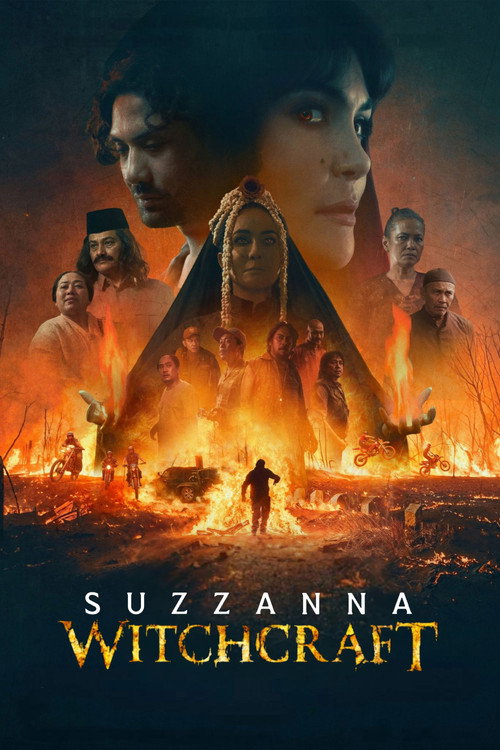
Suzzanna: Witchcraft
2026
No user ratings available yet
Representation score: 4.5 out of 10
Representation Score
Minimal
2025
Director
Fajar Nugros
Runtime
97 minutes
Average Rating
No ratings yetNew Showbiz Analysis
The film opens with a Javanese wedding where Mirah’s "bad luck" is already a village secret, setting the tone for a folk horror that treats tradition as a weapon. Mirah is the protagonist, but her story is driven by the "Bahu Laweyan" curse, which kills any man who gets close to her. This frames her femininity as inherently dangerous, a cultural trope that the film both invokes and critiques. Bana, the restaurant owner, offers her refuge, but his love is conditional on his ability to protect her from the curse’s consequences. The factory scenes contrast village superstition with modern labor exploitation, where Mirah’s "bad luck" is used to dismiss her as a threat to productivity. The film’s argument is that tradition is a cage, but its resolution remains tragic: Mirah and Bana choose love despite the curse, suggesting that personal connection can override cultural determinism. The last image likely reinforces this, showing their bond as a form of resistance against a village that would rather see them dead than happy.
Category Breakdown
No queer characters, relationships, or identities appear in the cast or dialogue. The narrative remains strictly heterosexual, focusing on Mirah’s romantic arc with Bana.
Mirah is the protagonist, but her agency is defined by a curse that kills men. Bana’s romance is framed as protection, while factory women are dismissed as hysterical.
The cast is entirely Indonesian. Ethnicity is unmarked; the narrative focuses on class and village dynamics rather than racial hierarchy.
Javanese folk horror drives the plot. The "Bahu Laweyan" curse treats tradition as a lethal force. Village gossip and factory labor define social order, with Mirah's "bad luck" framing tradition as oppressive.
No disabled characters or impairments are depicted. The narrative does not engage with disability themes or representation.
Present on Screen
Limited or Absent
Official Synopsis
Mirah, a woman shunned by her village after the mysterious deaths of men connected to her, seeks refuge in a Padang restaurant owned by Bana, who falls in love with her. As more men die, Mirah discovers she’s cursed by her stepsister Puti with the deadly “Bahu Laweyan” curse, which kills any man who becomes intimately involved with her. Fueled by revenge, Mirah plans to destroy Puti’s happiness by targeting her husband. Despite the deadly curse, Mirah and Bana craft their own tragic love story, choosing to be together no matter the consequences.
2026
2019
2025

2025

1981

1980
1976
2023
No reviews yet. Be the first to share your thoughts on this movie!
Use the rating form above to leave a star rating and optional review.