Atlantic Rhapsody
1989
No user ratings available yet
Representation score: 5.1 out of 10
Representation Score
Limited
1998
Director
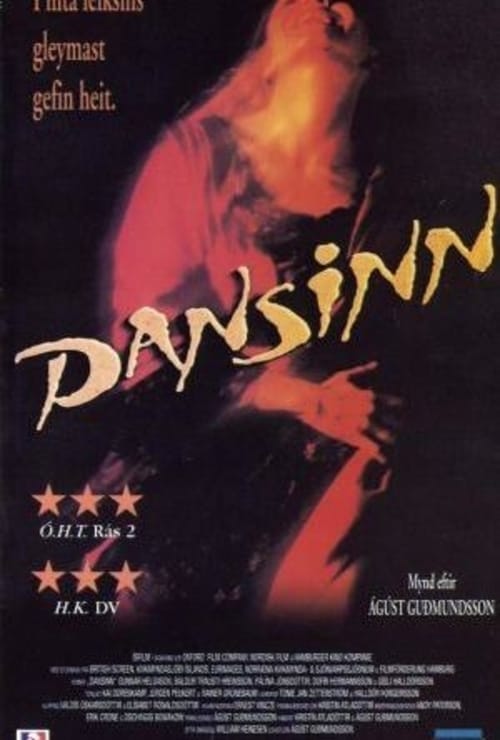
Ágúst Guðmundsson
Runtime
83 minutes
Average Rating
No ratings yetNew Showbiz Analysis
The Dance is a historical drama focused on a specific time and place, emphasizing period authenticity over modern diverse representation. It adheres to the social norms of 1913 Iceland, creating a localized narrative that prioritizes historical accuracy. The film's strength lies in its detailed character development, especially Sirsa's active role and emotional journey. However, the film remains largely homogeneous, lacking LGBTQ+ representation or queer subtext.
Category Breakdown
The film does not include any explicit LGBTQ+ characters or narratives that question the assumption that everyone is straight. Romantic tensions are centered around traditional heterosexual relationships between Sirsa, Harald, and Ívar.
Sirsa stands out by actively pursuing her desires, which disrupts typical period-piece stereotypes. Despite the patriarchal social structure, she plays a significant role in driving the story and making her own decisions.
The setting mirrors the demographic uniformity of a 1913 Icelandic island. The cast accurately reflects the historical demographics of a remote North Atlantic community.
The story examines the tension between organized religion and human impulses through the clergyman. It emphasizes cultural preservation through traditional hierarchies and folk music.
There are no characters with disabilities in the film. A character dies in a shipwreck, but disability is not used as part of the story.
Present on Screen
Limited or Absent
Official Synopsis
Águst Guðmundsson directed this Icelandic period drama, adapted from the short story We Must Dance by William Heinesen, and set on an island in 1913. Pétur (Gunnar Helgason) narrates, recalling the days when mainlanders arrived for a wedding. Flirtatious Sirsa (Pálína Jónsdottir) marries Harald (Dofri Hermannsson), son of a wealthy landowner on the island. Offshore, a ship is sinking, so the men form a rescue party, returning with the captain, the engineer, and several sailors. With a storm gathering, the engineer dies. The clergyman requests an end to the festivities as a mark of respect. Sirsa protests, but her new husband brings the celebration to a halt. The group then fragments into different activities, drunken or otherwise, and the sensual Sirsa directs her attention toward the handsome Ívar (Baldur Trausti Hreinsson). The film's score features traditional folk music.
1989

2006
1995
1996

2011
2004
2001
1999
No reviews yet. Be the first to share your thoughts on this movie!
Use the rating form above to leave a star rating and optional review.