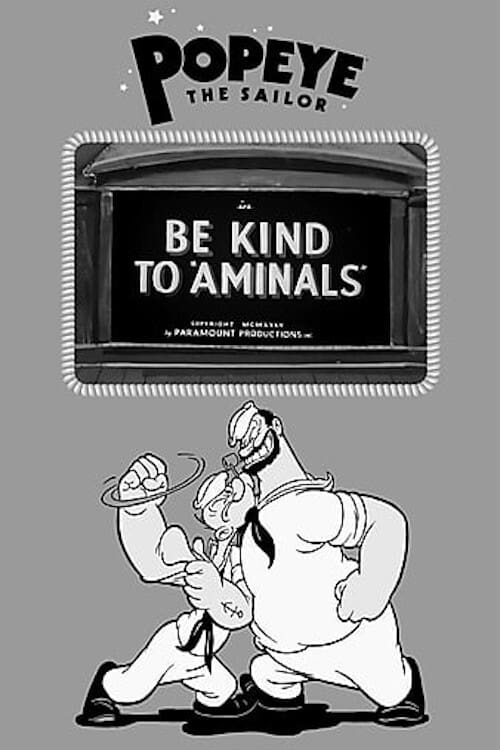
Be Kind to 'Aminals'
1935
No user ratings available yet
Diversity score: 2.8 out of 10

1935
ApprovedDirector
Dave Fleischer
Runtime
8 minutes
Average Rating
No ratings yetSynopsis
A sleepless Betty can't take the noise of the city any more, and heads out into the country for some peace and quiet. She soon discovers that the country has its own problems.
Overall Score
Limited
Category Breakdown
LGBTQ+ Representation
The film lacks LGBTQ+ characters or narratives. The story follows a conventional arc centered on a single protagonist seeking environmental relief.
Gender Representation
Betty serves as the female protagonist, though her motivations lean toward common tropes of sensory overwhelm. The film does not subvert traditional gender hierarchies or portray masculinity as inept.
Racial & Ethnic Diversity
The film likely reflects the homogeneous casting standards of the 1930s. It relies on the Western-centric, white character archetypes typical of the era's demographic norms.
Religious & Cultural Diversity
The narrative explores the dichotomy between urban and rural life. It focuses on personal comfort rather than providing a critique of capitalism or organized religion.
Disability Representation
Insomnia serves as a plot catalyst for the protagonist. However, this condition is used as a comedic device rather than a nuanced portrayal of mental health.
Strengths
Areas for Improvement
AI Analysis
Stop That Noise is a product of the 1930s animation era, prioritizing visual gags and slapstick over social commentary. While it features a female lead, the characterization remains within the bounds of period-typical tropes. The film lacks demographic breadth and intersectional complexity. It focuses on individual situational comedy and the struggle between city and country life rather than deconstructing social hierarchies. Ultimately, the work reflects the social constraints of its time, offering a standard period experience without significant progressive representation.
1935
1934
1939
1934
1948
1952
1945
1930

1941
1937

1952
1935
No reviews yet. Be the first to share your thoughts on this movie!
Use the rating form above to leave a star rating and optional review.