I Can No Longer Hear the Guitar
1991
No user ratings available yet
Representation score: 7.2 out of 10
Representation Score
Fair
1975
Director
Philippe Garrel
Runtime
79 minutes
Average Rating
No ratings yetNew Showbiz Analysis
Philippe Garrel’s work offers a sophisticated critique of Western social norms and traditional morality. By focusing on the failures of the May '68 movement, the film rejects institutional stability in favor of individual subjectivity. However, the film’s narrow demographic scope limits its representation of diverse identities. It lacks racial and LGBTQ+ diversity, remaining rooted in a specific, predominantly white European bohemian subculture. Ultimately, the film’s strength lies in its thematic subversion of traditional social structures, even as it fails to represent a wide range of human experiences.
Category Breakdown
The film focuses on a traditional male-female relationship and does not include characters with non-binary or LGBTQ+ identities. It emphasizes the psychological tension between a man and a woman rather than exploring diverse sexual orientations or gender identities.
The film challenges traditional gender roles by depicting emotional volatility and psychological turmoil rather than stable domestic leadership. It avoids the clichés of nurturing wives or stable husbands, focusing instead on the emotional dynamics between characters.
The cast and setting are predominantly white and European, with no significant representation of non-Anglo-Saxon cultures. The film is set in a specific 1970s Parisian intellectual environment.
The film excels in deconstructing Western social institutions and existential searching. It portrays anti-social behaviors as authentic expressions of existential truth, focusing on subjective morality and personal search for meaning.
The film does not explicitly feature characters with visible or invisible disabilities as central plot drivers. The focus remains on neuro-existentialist themes rather than specific disability representation.
Present on Screen
Limited or Absent
Official Synopsis
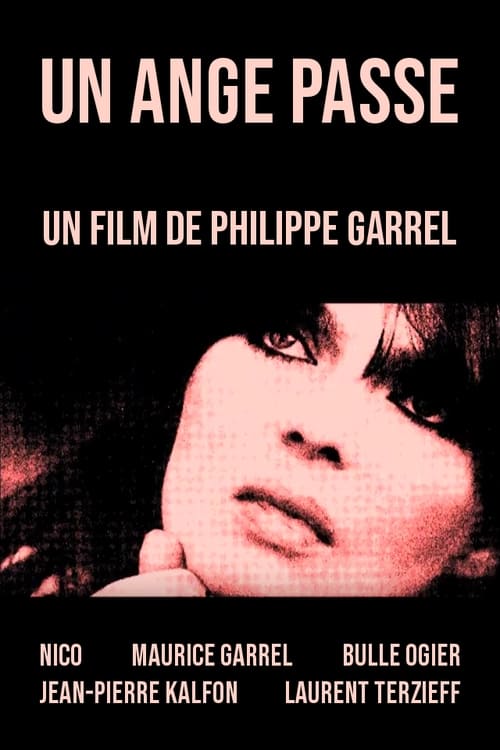
Nico is an ethereal poet haunting the gaps between scenes of Jean-Pierre Kalfon, Bulle Ogier, Laurent Terzieff, and Garrel’s father, Maurice, discussing the filmmaker’s staple topics: love, psychoanalysis, and the failures of May ’68.
1991
1977
1976

1963
1968
1979

1968
2011
No reviews yet. Be the first to share your thoughts on this movie!
Use the rating form above to leave a star rating and optional review.