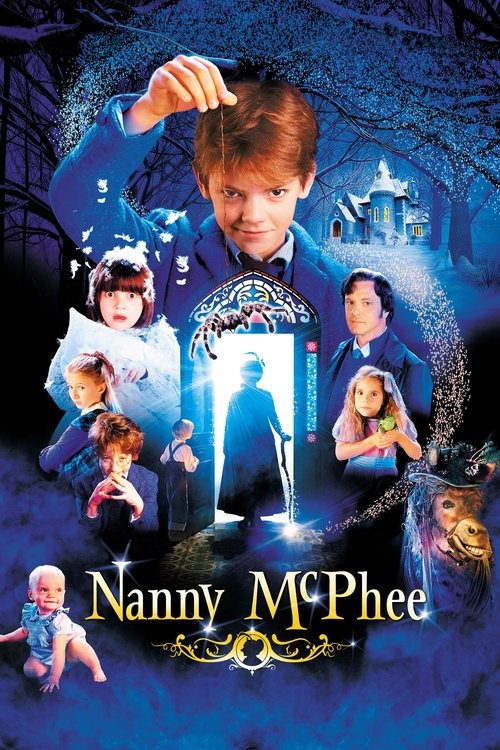
Nanny McPhee
2005
No user ratings available yet
Representation score: 2.6 out of 10
Representation Score
Limited
2010
PGDirector
Susanna White
Runtime
109 minutes
Average Rating
No ratings yetNew Showbiz Analysis
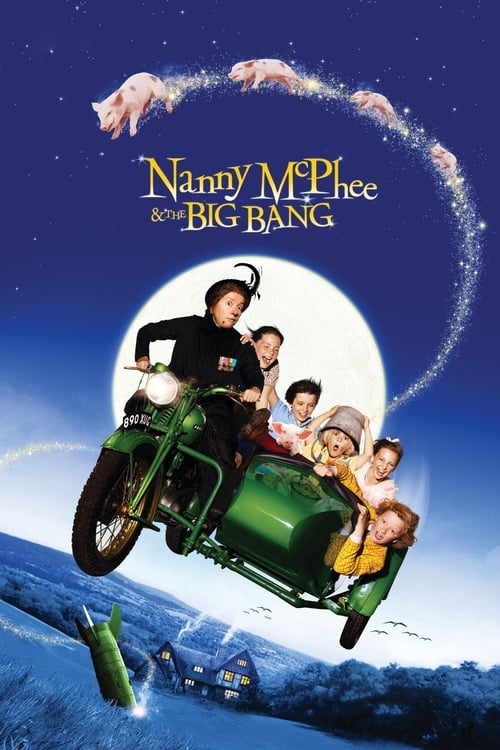
Nanny McPhee and the Big Bang is a traditional family fantasy that emphasizes clear moral boundaries and the preservation of established social orders. While it slightly subverts gender norms by positioning its female lead as a central authority figure, the narrative remains firmly rooted in conventional Western hierarchies. The film's focus on a homogeneous, middle-class British setting restricts its exploration of diverse racial and cultural backgrounds. It reinforces the nuclear family unit rather than challenging social norms. Overall, the film's structure upholds traditional societal structures, offering limited engagement with diverse identities or the disruption of straight-centered or colonial-era social norms.
Category Breakdown
The film focuses on traditional heterosexual relationships and family structures, without including any non-binary gender identities or same-sex romantic stories.
Nanny McPhee is portrayed as a strong and influential character who drives change and enforces discipline. However, the film reinforces traditional roles by depicting women primarily as disciplinarians and nurturers.
Set in a historical British context, the film features a predominantly white cast focused on a localized, middle-class British experience without incorporating diverse casting.
The story emphasizes the stability of the nuclear family and the importance of authority figures. It upholds traditional values and restores social order through discipline.
The film does not significantly or intentionally depict characters with visible or invisible disabilities. Characters are defined by their personalities and magical abilities rather than neurodivergence or physical disabilities.
Present on Screen
Limited or Absent
Official Synopsis
Nanny McPhee appears at the door of a harried young mother who is trying to run the family farm while her husband is away at war. But once she’s arrived, Nanny discovers that the children are fighting a war of their own against two spoiled city cousins who have just moved in. Relying on everything from a flying motorcycle and a statue that comes to life to a tree-climbing piglet and a baby elephant, Nanny uses her magic to teach her mischievous charges five new lessons.
2005
2020

2006
2013

2008
1998
2000
1971
No reviews yet. Be the first to share your thoughts on this movie!
Use the rating form above to leave a star rating and optional review.