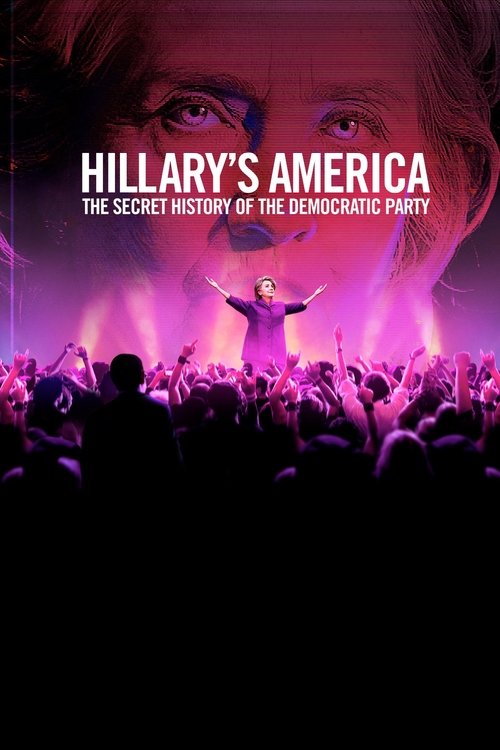
Hillary's America: The Secret History of the Democratic Party
2016
No user ratings available yet
Representation score: 0.9 out of 10
Representation Score
Minimal
2012
PGDirector
Dinesh D'Souza, John Sullivan
Runtime
88 minutes
Average Rating
No ratings yetNew Showbiz Analysis
This documentary serves as a direct counter-narrative to progressive media. It critiques the elements—such as intersectionality and identity politics—that define modern inclusive storytelling. Rather than exploring diverse perspectives, the film prioritizes the defense of established social and economic institutions. It frames the rise of diverse political identities as a threat to national cohesion and traditional Western values. Ultimately, the work functions as a staunchly conservative critique of contemporary social shifts, actively resisting multiculturalism and the deconstruction of traditional hierarchies.
Category Breakdown
The film does not center LGBTQ+ characters or narratives. It views the expansion of non-straight relationships with skepticism, seeing them as symptoms of a broader shift rather than offering nuanced representation.
Gender dynamics are not a primary focus. The film lacks subversion of traditional gender roles, instead presenting the evolution of gender roles as a factor in the destabilization of American social cohesion.
Race is central to the thesis but viewed skeptically. The narrative portrays the emphasis on racial identity as a political tool used to manipulate voters.
The film advocates for preserving traditional Western institutions. It frames the dismantling of patriotism, capitalism, and religious structures as a systemic threat to American identity.
The film does not address themes of physical or neurodivergent disabilities. It focuses solely on macro-political and socioeconomic structures.
Present on Screen
Limited or Absent
Official Synopsis
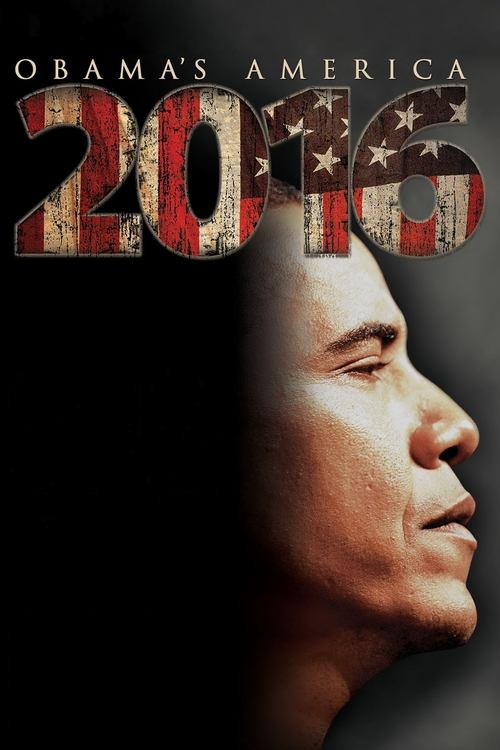
"If Obama wins a second term, where will we be in 2016?" Across the globe and in America, people in 2008 hungered for a leader who would unite and lift us from economic turmoil and war. True to Americas ideals, they invested their hope in a new kind of president, Barack Obama. What they didn't know is that Obama is a man with a past, and in powerful ways that past defines him--who he is, how he thinks, and where he intends to take America and the world.
2016
2012
2014

2016
2016
2019
2020
2017
No reviews yet. Be the first to share your thoughts on this movie!
Use the rating form above to leave a star rating and optional review.