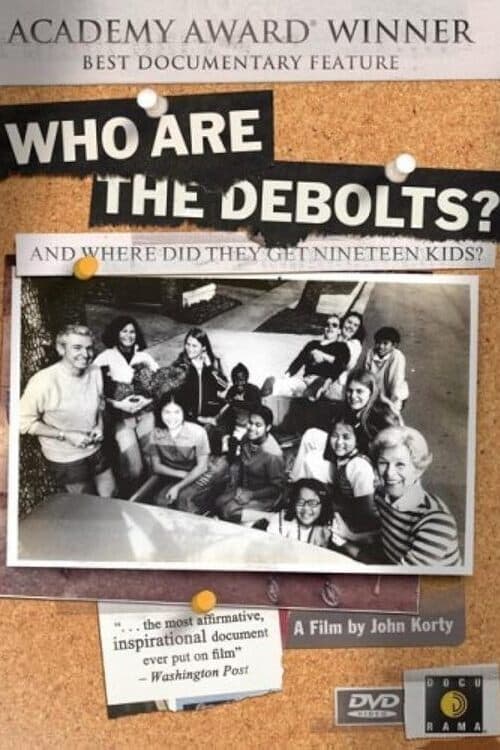
Who Are the DeBolts? And Where Did They Get Nineteen Kids?
1977
No user ratings available yet
Representation score: 5.5 out of 10

Representation Score
Limited
2003
UnratedDirector
Jonathan Karsh
Runtime
83 minutes
Average Rating
No ratings yetNew Showbiz Analysis
My Flesh and Blood is a study of resilience and unconventional domesticity. It succeeds by providing meaningful depth to its subjects, particularly through its nuanced treatment of disability and the subversion of traditional maternal roles. However, the film lacks breadth. It offers almost no representation regarding racial, ethnic, or LGBTQ+ identities, focusing instead on a homogeneous domestic unit. Ultimately, the documentary's strength lies in its observational lens, which avoids sentimental clichés to prioritize the authentic ability to act of the family members.
Category Breakdown
The documentary focuses on the Tom family's domestic structure. There are no LGBTQ+ characters or narratives addressing non-assuming gender matches what was assigned at birth identities.
Susan Tom serves as a central figure of leadership and ability to act. By centering household management on a female protagonist, the film challenges traditional patriarchal hierarchies.
The film appears to reflect a homogeneous demographic. There is no indication of a non-white or non-Anglo-Saxon majority cast within the Tom family.
The film adopts a secular, observational tone rather than a moralistic one. It avoids traditionalist sentimentalism in favor of a raw, humanistic perspective.
The narrative provides a significant role in driving the story to children with serious disabilities and diseases. It prioritizes their lived realities and autonomy over mere plot devices.
Present on Screen
Limited or Absent
Official Synopsis
My Flesh and Blood is a 2003 documentary film by Jonathan Karsh chronicling a year in the life of the Tom family. The Tom family is notable as the mother, Susan, adopted eleven children, most of whom had serious disabilities or diseases. The film itself is notable for handling the sensitive subject matter in an unsentimental way that is more uplifting than one might expect.
1977
2010

2019

2011
2010
2004
2018
2000
No reviews yet. Be the first to share your thoughts on this movie!
Use the rating form above to leave a star rating and optional review.