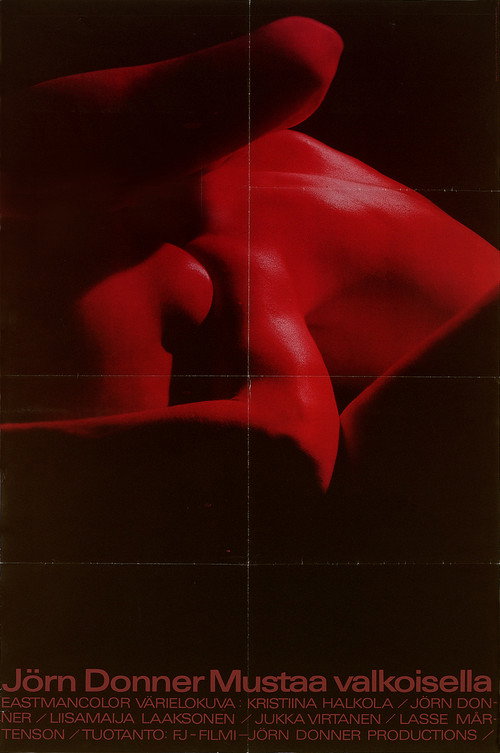
Black on White
1968
No user ratings available yet
Diversity score: 5.2 out of 10
1969
Director
Jörn Donner
Runtime
98 minutes
Average Rating
No ratings yetSynopsis
Tuula's husband Jukka takes care of all domestic chores. Tuula seems to have no idea that her husband spends his evenings working as a major league ice hockey referee. She also finds out about his extra-marital affair with a female rally driver. In revenge, Tuula starts seeing her gynecologist Timo Paasi, a married man with six children.
Overall Score
Fair
Category Breakdown
LGBTQ+ Representation
The narrative focuses almost exclusively on heteronormative sexual dynamics and extramarital affairs. There is no evidence of queer narratives or non-cisnormative identities within the text.
Gender Representation
The film subverts traditional hierarchies by centering Tuula’s agency and sexual autonomy. It disrupts mid-century domesticity by portraying Jukka managing domestic chores and challenging patriarchal norms.
Racial & Ethnic Diversity
The cast is predominantly white, reflecting a homogeneous European demographic typical of 1960s drama. There is no evidence of racial blending or intentional diversification.
Religious & Cultural Diversity
The film critiques Western social institutions and the sanctity of the nuclear family. It frames infidelity through psychological complexity rather than moral failure, embracing moral relativism.
Disability Representation
There are no prominent depictions of physical or neurodivergent disabilities. The story remains focused on the psychological and interpersonal dynamics of the central characters.
Strengths
Areas for Improvement
AI Analysis
Jörn Donner’s drama succeeds as a psychological study of shifting social mores, particularly regarding gender and domesticity. By prioritizing female subjectivity, the film offers a sophisticated look at autonomy during a period of transition. However, the work is limited by its narrow demographic scope. The lack of racial diversity and queer representation reflects the era's cinematic landscape but restricts the film's broader social reach. Ultimately, the film is a critique of bourgeois morality. It trades traditional moral certainties for a complex exploration of intimacy and the breakdown of the conventional family unit.
1968

1976
1964

1969
1968
1972
1969

1973
1973
1969
1973

1991
No reviews yet. Be the first to share your thoughts on this movie!
Use the rating form above to leave a star rating and optional review.