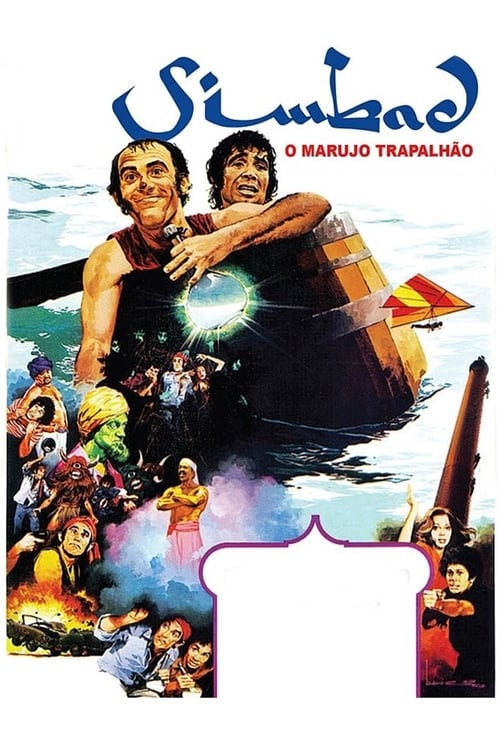
Simbad, O Marujo Trapalhão
1976
No user ratings available yet
Diversity score: 3.0 out of 10

1976
Director
J.B. Tanko
Runtime
86 minutes
Average Rating
No ratings yetSynopsis
This movie is a spoof of "Planet of the Apes" (1968) and follows the storyline of the original step by step - in spite of being a crazy parody of the original film. A group of men lands in a balloon on an area (it's not a planet, it's more like a hill) where talking apes rule and humans are slaves. The apes try to transform the guys in monkeys; a simian princess falls in love with one of them; and so on. This film is one of the several movies made for the popular Brazilian group "Os Trapalhões" - Didi (Renato Aragão), Dedé, Mussum and Zacarias (who at this point hadn't joined the troupe yet) -, many of them inspired by American blockbusters. It's a very fun entertainment, but the humor is very "local" to be understood in other countries. Oh, yeah, the ape "makeup" is terrible, but that's part of the fun. The movie doesn't take itself seriously.
Overall Score
Limited
Category Breakdown
LGBTQ+ Representation
The film relies on a heteronormative romantic trope involving a simian princess and a male protagonist. There are no depictions of same-sex intimacy or non-cisnormative identities.
Gender Representation
Male protagonists drive the plot through slapstick and adventure. While a simian princess exists, her role is centered on a romantic subplot rather than independent agency.
Racial & Ethnic Diversity
The cast reflects Brazil's demographic makeup through members like Mussum. However, the narrative does not use racial themes or intersectional identity as a central plot driver.
Religious & Cultural Diversity
The parody engages with Western cinematic tropes but relies on local Brazilian comedic timing. It lacks explicit critiques of institutions like religion or capitalism.
Disability Representation
There is no mention of characters with visible or invisible disabilities. No neurodivergent or physical disability traits are integrated into the character arcs.
Strengths
Areas for Improvement
AI Analysis
The film functions primarily as a localized comedic parody of Western science fiction. It prioritizes slapstick humor and genre spoofing over complex social or identity-based narratives. While the cast reflects Brazilian demographic realities, the story remains rooted in traditional adventure tropes. The narrative architecture follows conventional structures, focusing on heteronormative romance and male-centric adventure. This limits the film's engagement with progressive intersectional themes or systemic social critique. Ultimately, the production serves mass-appeal populist comedy rather than exploring diverse lived experiences or deconstructing social hierarchies.
No reviews yet. Be the first to share your thoughts on this movie!
Use the rating form above to leave a star rating and optional review.