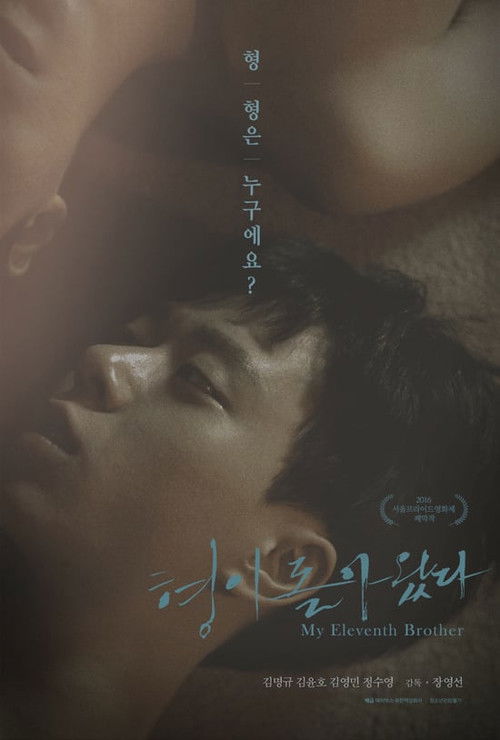
My Eleventh Brother
2016
No user ratings available yet
Representation score: 5.6 out of 10

Representation Score
Fair
2016
Director
Jo Woong
Runtime
70 minutes
Average Rating
No ratings yetNew Showbiz Analysis
Summer Dream offers a thoughtful examination of how legal and social institutions shape non-standard family units. By focusing on a single father's struggle to provide a 'normal' identity for his daughter, the film goes beyond simple domestic clichés to address systemic exclusion. The film succeeds in diversifying the domestic drama genre by placing a man in a nurturing role and introducing the complexities of the migrant experience. These elements provide a more sophisticated social commentary compared to typical family melodramas. However, the film's impact is limited by its character dynamics. Female characters lack a significant role in driving the story, and the narrative focuses more on conforming to traditional norms than on expanding the spectrum of identity.
Category Breakdown
The film includes a single father figure but does not explicitly feature queer identities or non-binary expressions.
Man Sik, a primary caregiver, challenges traditional views of masculinity. However, female characters seem to play secondary roles, serving mainly as catalysts for his development.
The inclusion of a Vietnamese character highlights the migrant experience. The film explores how ethnicity and nationality intersect with social legitimacy in South Korea.
The narrative critiques institutional norms that favor a two-parent household. It delves into the moral complexities of navigating systemic pressures to achieve social standing.
There are no visible or mentioned depictions of physical, neurodivergent, or mental health disabilities in the narrative.
Present on Screen
Limited or Absent
Official Synopsis
Man Sik is a single father who raises his 7-years-old daughter Ye Na alone. He has yet to register her birth, because he wants her birth certificate to be the same as the other kids, which is to have a mother and father. In order to do so, he offers a deal to a woman from Vietnam: he will pay her 20 million won to put her name on a marriage certificate as his wife and Ye Na's birth certificate as her mother. She declines the offer and Man Sik becomes devastated. Mi Hee then appears.
2016

2002

2023
2013

2004

2004

2017

2020
No reviews yet. Be the first to share your thoughts on this movie!
Use the rating form above to leave a star rating and optional review.