
Hell's Garden
2021
No user ratings available yet
Representation score: 4.4 out of 10
Representation Score
Good
2010
Director
Hideo Jojo
Runtime
72 minutes
Average Rating
No ratings yetNew Showbiz Analysis
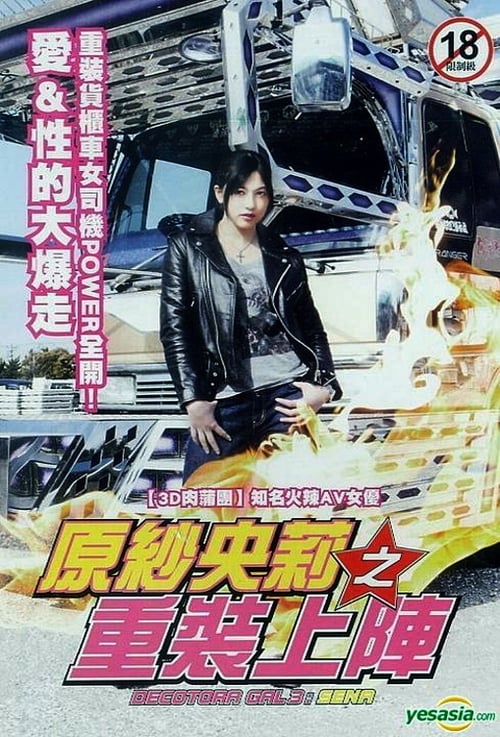
Decotora Gal 3: Sena offers a moderate level of representation by challenging traditional gender roles. Sena provides a rare look at women's ability to drive the story within the high-octane, traditionally masculine world of decorated trucks. However, the film largely adheres to established genre conventions. The narrative focuses on situational ethics and criminal underworld clichés rather than actively deconstructing systemic social hierarchies or exploring queer identities. While the inclusion of a character with a visual impairment adds a layer of diversity, the film's overall impact is limited by its reliance on localized subculture and traditional spectacle-based marketing.
Category Breakdown
The film does not explicitly depict same-sex relationships or non-cisgender identities. Although the main female character challenges traditional gender roles, there is no clear critique of the assumption that everyone is straight or cisgender.
Sena challenges traditional gender roles by running a business in a male-dominated industry. However, the focus on a stripper character and idol marketing suggests some reliance on traditional female spectacle clichés.
The film is specifically Japanese and does not feature significant racial blending or diverse ethnic representation within the cast.
The story explores morality within the Japanese underworld and Yakuza subcultures. It operates within localized social structures rather than presenting a broader anti-Western or anti-capitalist framework.
Azumi is introduced as a visually impaired character. It remains unclear if she has meaningful control over her actions or if her impairment primarily serves as a plot device for Sena.
Present on Screen
Limited or Absent
Official Synopsis
Sena has had a care-free deco-truck business, but one day, she receives a strange request by a cheap hoodlum, Takizawa, to carry a blind stripper, Azumi, to a certain location. She reluctantly accepts it, but yakuza members begin a persistent search for Takizawa, who turns out to have stolen their company’s money. Here comes the long-awaited new deco-truck series featuring the idol, Saori Hara, rolling down the highway on a ton of love, action, and steam!
2021

2004
2008

1997
1978

2021

2010

2018
No reviews yet. Be the first to share your thoughts on this movie!
Use the rating form above to leave a star rating and optional review.