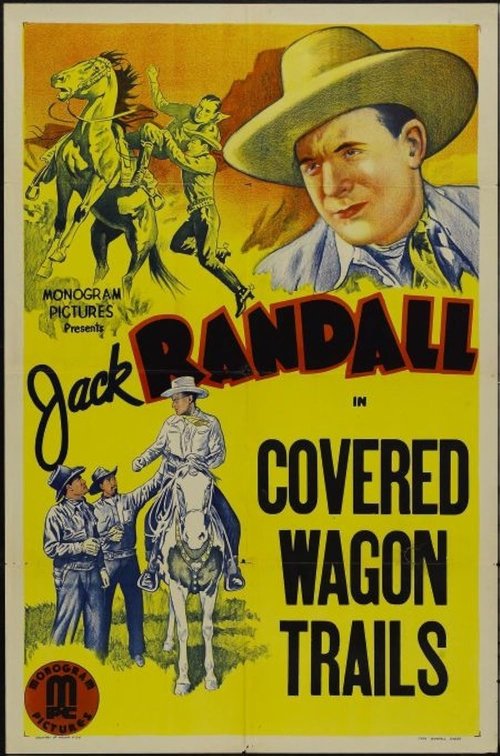
Covered Wagon Trails
1940
No user ratings available yet
Representation score: 1.3 out of 10
Representation Score
Minimal
1951
PassedDirector
Philip Ford
Runtime
67 minutes
Average Rating
No ratings yetNew Showbiz Analysis
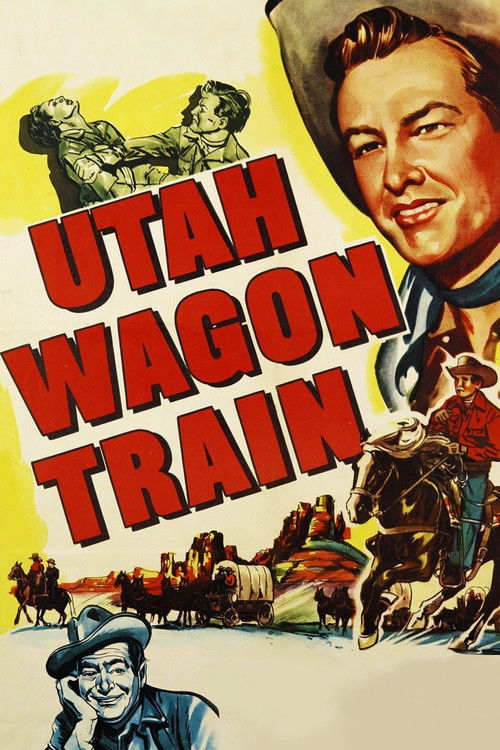
The film opens on the stark Utah desert, a blank slate that erases Indigenous history to make room for the white settler myth. Rex Allen, billed as himself, rides Koko the Miracle Horse, a pairing that blurs fiction and reality to sell the legend of the self-made cowboy. The wagon train is a meritocratic unit where survival depends on individual skill, not communal consensus. Nancy Bonner is the prize, her safety the metric of Rex’s success. The last image reinforces the frontier as a place of purity and self-reliance, where the strong protect the weak and the land is a resource to be crossed. The film’s argument is straightforward: competence and loyalty are rewarded, and the Western ideal is a valid, unmarked norm.
Category Breakdown
The cast is strictly heterosexual, with Nancy Bonner serving as the romantic interest for Rex Allen. No same-sex intimacy or non-traditional gender dynamics appear in the narrative.
Rex Allen is the competent protector and moral center, while Nancy Bonner is the passive prize requiring his rescue. Buddy Ebsen’s bumbling masculinity provides comic contrast, but the hierarchy remains firmly male-dominated.
The cast is entirely white, depicting the Utah frontier as an empty space devoid of Indigenous presence. Whiteness is the unmarked norm, with no non-white characters to challenge or complicate the settler narrative.
The film celebrates the self-reliant cowboy myth and the legitimacy of frontier settlement. The wagon train represents a cohesive, meritocratic unit where individual skill and loyalty are the highest virtues.
No characters have disabilities, and the narrative does not engage with impairment, medical issues, or neurodiversity. The focus is on physical competence and horsemanship rather than bodily difference.
Present on Screen
Limited or Absent
Official Synopsis
Rancher Rex Allen receives a summons from his uncle. an old time frontiersman, that he is in trouble. The uncle has been hired to lead a modern-day band of adventurers on a wagon train retracing the route taken by their ancestors 100 years ago. Before Rex can talk to his uncle, the uncle is murdered, and Rex sets out to find the killer and the motive by taking his uncle's place as the leader of the wagon train.
1940
1959

1951
1956
1944
1930

1952
1939
No reviews yet. Be the first to share your thoughts on this movie!
Use the rating form above to leave a star rating and optional review.