
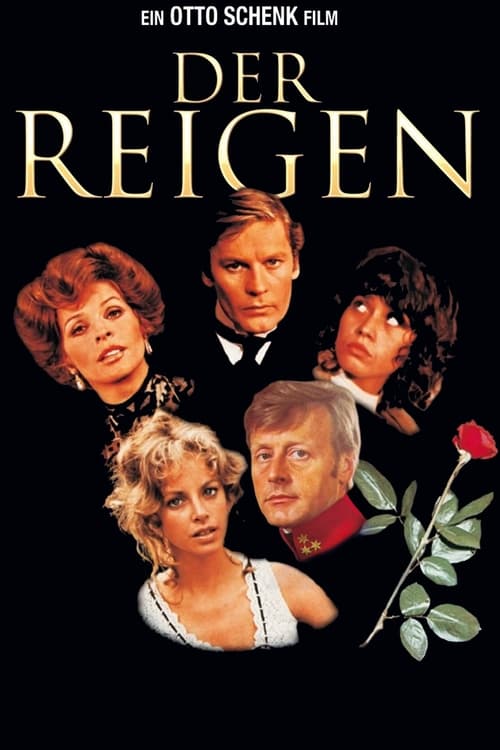
La Ronde
1950
No user ratings available yet
Representation score: 4.5 out of 10
Representation Score
Limited
1973
RDirector
Otto Schenk
Runtime
122 minutes
Average Rating
No ratings yetNew Showbiz Analysis
Otto Schenk’s *Reigen* functions as a cyclical, episodic study of human desire in turn-of-the-century Vienna. The film uses an all-knowing interlocutor to guide viewers through a series of romantic and sexual encounters, emphasizing the repetitive nature of social and intimate exchanges. While the film avoids a singular moral judgment, it remains firmly rooted in the traditional aesthetic and social frameworks of its historical setting. The narrative prioritizes the observation of period-specific social mores over the disruption of systemic hierarchies. Ultimately, the film presents a conventional view of the era's demographic norms. It lacks intentional multi-layered representation or a critique of the rigid class structures present in 1900 Vienna.
Category Breakdown
The film touches on hedonistic social interactions but lacks clear representation of LGBTQ+ identities. It does not challenge the assumption that everyone is straight or cisgender.
Women play various roles, including servants and courtesans, navigating sexual economies. However, the narrative follows traditional period clichés of seduction rather than breaking down gender hierarchies.
Set in 1900 Vienna, the film reflects the homogeneous social landscape of the time. The cast lacks multi-ethnic or diverse representation.
The story observes the social rituals and subjective morality of fin-de-siècle Vienna. It focuses on historical social roles rather than critiquing modern Western institutions.
The narrative contains no mention of characters with visible or invisible disabilities.
Present on Screen
Limited or Absent
Official Synopsis
An all-knowing interlocutor guides us through a series of affairs in Vienna, 1900. A soldier meets an eager young lady of the evening. Later he has an affair with a young lady, who becomes a maid and does similarly with the young man of the house. The young man seduces a married woman. On and on, spinning on the gay carousel of life.
1950
1969
1950
1970

1966
1967
2001
2000
No reviews yet. Be the first to share your thoughts on this movie!
Use the rating form above to leave a star rating and optional review.