
Ziegfeld Follies
1945
No user ratings available yet
Representation score: 2.7 out of 10
Representation Score
Limited
1958
Director
Tito Davison
Runtime
80 minutes
Average Rating
No ratings yetNew Showbiz Analysis
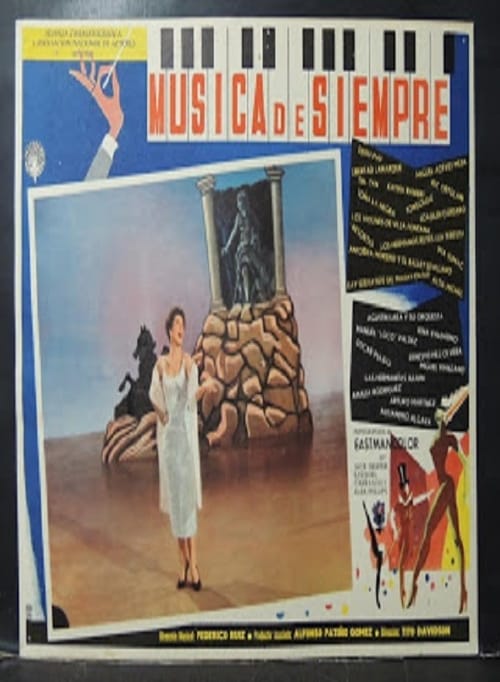
Music of Always functions as a traditional musical film, prioritizing entertainment and rhythmic cohesion over social exploration. Its narrative structure adheres to the standards of the late 1950s, emphasizing demographic and moral norms of the time. The film lacks characters who reflect more than one aspect of diversity, focusing instead on a conventional cinematic format that highlights musical talent within a traditional context.
Category Breakdown
The film does not include any non-binary gender identities or same-sex relationships, sticking to the traditional heterosexual norms of 1958 musicals.
The story emphasizes male characters' control over the plot, focusing on technical and managerial roles without challenging traditional gender hierarchies.
The production follows the demographic norms of the late 1950s, with no indication of diverse casting or non-Anglo-Saxon majority.
The film celebrates cinema and music through a traditional lens, without critiquing Western institutions or presenting any significant secular or anti-capitalist themes.
There are no visible or hidden disabilities integrated into the main characters or plot development.
Present on Screen
Limited or Absent
Official Synopsis
Producer, director and projectionist watch an assortment of musical numbers and brainstorm about framing narrative that could contain them all.
1945
1954
1962
1933
1937
1939
1942
1960
No reviews yet. Be the first to share your thoughts on this movie!
Use the rating form above to leave a star rating and optional review.