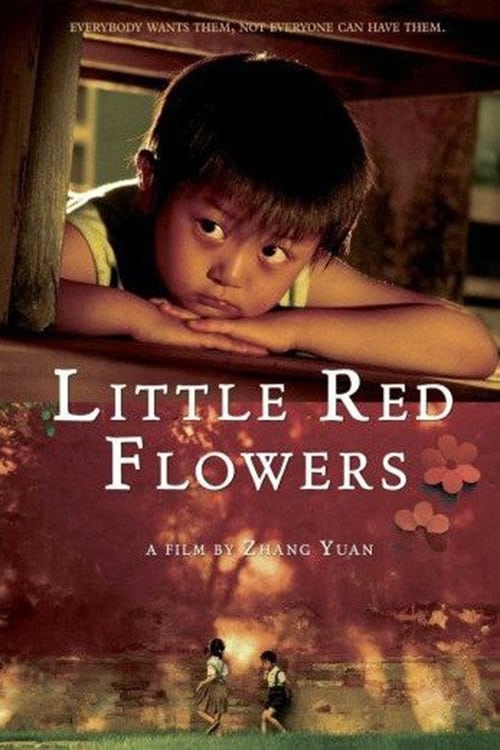
Little Red Flowers
2006
No user ratings available yet
Representation score: 5.5 out of 10
Representation Score
Fair
2011
Director
Chen Yu
Runtime
92 minutes
Average Rating
No ratings yetNew Showbiz Analysis
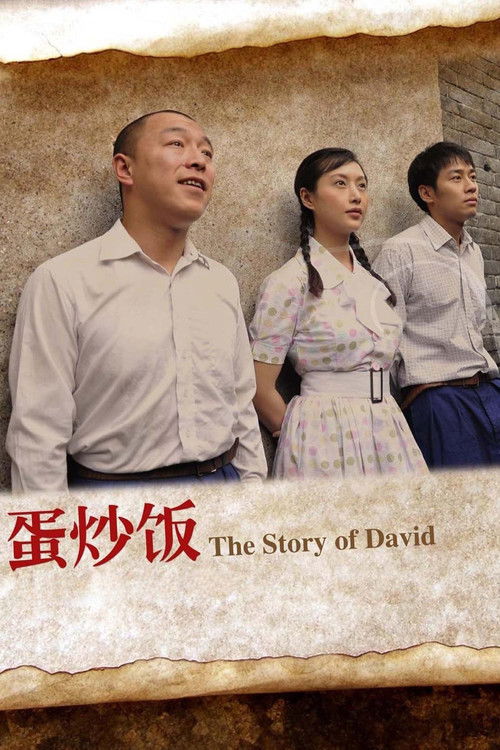
The Story of David is a character-driven period piece that emphasizes historical realism over social critique. It follows the personal growth of three childhood friends as they navigate the dramatic societal changes of 1970s Beijing. While the film offers nuanced portrayals of individual ability to act, particularly in how characters pursue personal dreams, it adheres to conventional narrative structures. It serves more as a historical account of social transitions rather than a critique of broader power structures. Overall, the film lacks the depth required to address multiple aspects of identity or intentionally disrupt social hierarchies, focusing instead on localized social shifts and traditional relationship dynamics.
Category Breakdown
The film focuses on traditional romantic pairings and childhood sweethearts. It does not include any representation of non-straight or non-cisgender identities or stories that challenge the assumption that everyone is straight or cisgender.
Su Moli demonstrates ability to act by rejecting domestic life to pursue stardom. However, the story remains rooted in traditional themes such as pregnancy and romantic heartbreak.
Set in 1970s Beijing, the film provides a detailed look at the Chinese experience. It does not explore multi-ethnic or color-blind casting scenarios.
The narrative examines the tension between communal Hutong life and evolving economic conditions. It documents the shift towards individualism during a time of historical change.
There are no visible or invisible disabilities portrayed among the main characters in this period drama.
Present on Screen
Limited or Absent
Official Synopsis
In the 1970s, three children lived in the old Beijing Hutong, Wang David, Li Hongbing, and Su Moli. They were childhood sweethearts and grew up together. While they are growing up, the society changes dramatically around them. David inherited his father's business in the restaurant, but because he cannot make egg fried rice, he could only do some cleaning work. Hongbing and Moli fell in love, but eventually broke up. Hongbin went out to explore the world; Moli, who was pregnant, was unwilling to accept David who loved her, and turned to go south to pursue her dream of becoming a star.
2006
1932
2016

1994
2010

2010
1987
2013
No reviews yet. Be the first to share your thoughts on this movie!
Use the rating form above to leave a star rating and optional review.