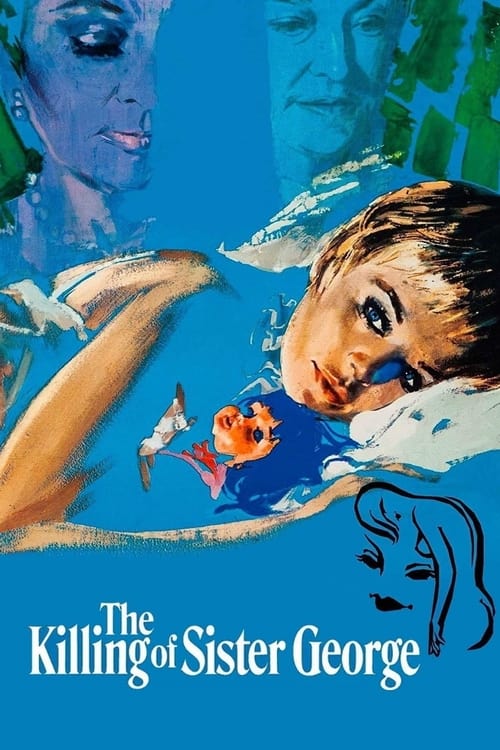
The Killing of Sister George
1968
No user ratings available yet
Representation score: 7.4 out of 10
Representation Score
Good
1972
RDirector
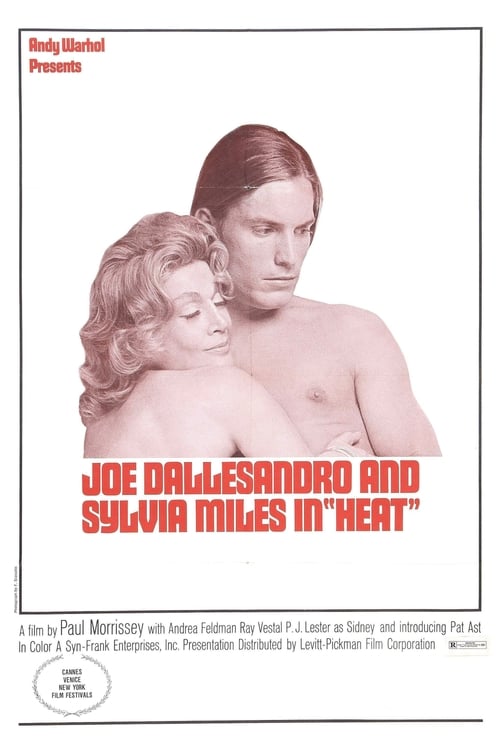
Paul Morrissey
Runtime
102 minutes
Average Rating
No ratings yetNew Showbiz Analysis
Paul Morrissey’s *Heat* is a transgressive exploration of identity that succeeds by deconstructing traditional social hierarchies. It excels in its sophisticated integration of LGBTQ+ identities and its subversion of gendered power dynamics, presenting a world defined by fluidity. However, the film's focus is narrow. While it challenges cultural norms and moral frameworks, it fails to provide a diverse racial tapestry, remaining centered on a specific underground art circle. This lack of multi-layered racial diversity limits its broader social scope. Ultimately, the film is a bold exercise in moral relativism. It prioritizes subjective impulse over fixed ethical codes, making it a significant, if racially limited, departure from 1970s cinematic conventions.
Category Breakdown
The film includes Jessica Todd, who is openly identified as a lesbian, showing queer existence as a natural part of life rather than a source of tragedy. LGBTQ+ identities are presented as integral to the story.
Women play key roles in driving the social and sexual momentum of the story, often wielding economic or emotional influence. The narrative challenges traditional masculine archetypes by portraying them as aimless or secondary figures.
The film lacks significant multi-ethnic or non-Anglo-Saxon representation. It focuses on the socioeconomic status and subcultural nuances of the Hollywood fringe, rather than a diverse racial tapestry.
The story critiques Western institutional stability by portraying family and religion as hollow constructs. It frames aimless hedonism and a disregard for authority as forms of liberation.
There is no evidence of characters with visible or invisible disabilities serving as central narrative drivers or plot devices.
Present on Screen
Limited or Absent
Official Synopsis
Former child star Joe Davis, reduced to living in a cheap Hollywood motel while struggling for acting jobs, is lusted after by nearly every woman he meets, including Jessica Todd, a tightly wound feminist who has recently come out as a lesbian. When Jessica's mother, Sally, an emotionally needy has-been actress, meets Joe, she moves him into her enormous, tacky mansion as her new boy toy and attempts to get him acting work.
1968

1983

1969

1969
1970

1974
1994

1983
No reviews yet. Be the first to share your thoughts on this movie!
Use the rating form above to leave a star rating and optional review.