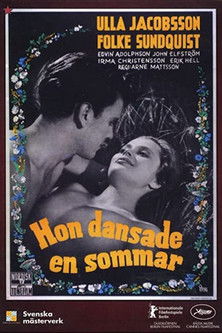
One Summer of Happiness
1951
No user ratings available yet
Representation score: 2.3 out of 10

Representation Score
Minimal
1958
K-16Director
Arne Mattsson
Runtime
67 minutes
Average Rating
No ratings yetNew Showbiz Analysis
Primavera de la vida operates as a conventional romantic drama from the late 1950s. The narrative relies on established clichés of generational friction and familial opposition, which typically reinforce the social hierarchies of the era rather than challenging them. The film lacks documented complexity or intentionality regarding the way different parts of someone's identity overlap. It appears to prioritize standard cinematic frameworks, focusing on a central romance and the conflict between a young man and a protective father. Because the film adheres to mid-century social norms, it offers little in the way of progressive character development or diverse representation.
Category Breakdown
The film lacks any representation of LGBTQ+ identities. The plot revolves around a traditional romantic pairing.
The story centers on a male student and a female protagonist. The woman's role seems influenced by a patriarchal father figure.
The production likely reflects the homogeneous demographics of 1958 Swedish cinema. No diverse casting is noted.
The narrative emphasizes traditional family structures and social stability. It lacks themes that challenge institutional norms.
There is no information regarding the inclusion or depiction of characters with disabilities.
Present on Screen
Limited or Absent
Official Synopsis
A student and his love for a young woman, misunderstood by her father.
1951

1953

1953
1946
1952
1968

1970

1968
No reviews yet. Be the first to share your thoughts on this movie!
Use the rating form above to leave a star rating and optional review.