
The Thundering West
1939
No user ratings available yet
Representation score: 1.0 out of 10
Representation Score
Minimal
1952
NRDirector
Fred F. Sears
Runtime
53 minutes
Average Rating
No ratings yetNew Showbiz Analysis
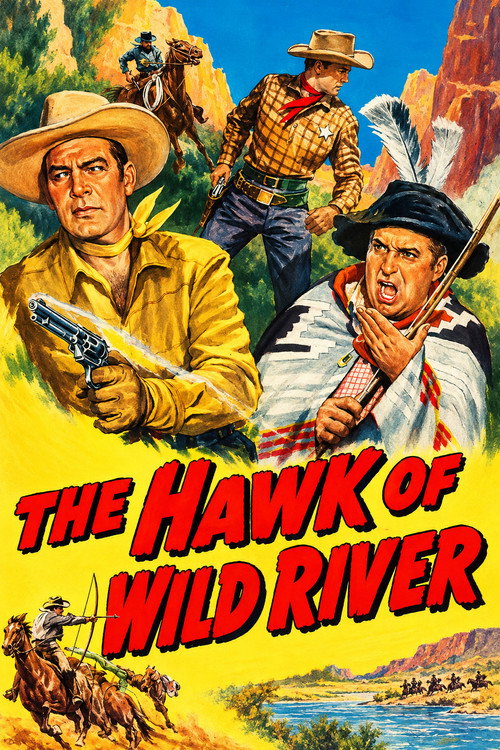
The film opens with a sun-bleached valley, a landscape that serves as both stage and antagonist, framing the "Wild River" as a space of inherent chaos. Into this void steps Steve Martin, a ranger whose competence is the film’s primary currency. The narrative’s argument is straightforward: the frontier is a lawless place that requires the imposition of white, male order to become civilized. This order is embodied by Sheriff Clark Mahoney, whose authority is passed seamlessly to his son Jack, reinforcing the idea that legitimate power is inherited and patrilineal. The central tension is provided by "The Hawk," a "part-Indian" outlaw played by Clayton Moore. The film treats his Native identity as a marker of wildness and otherness; he is dignified and skilled, yet ultimately defined by his opposition to the law. The "sold meaning" is that Native identity is a natural state of chaos that must be subdued by Anglo-American rationality. The camera loves the white heroes, framing them as the moral and physical center, while the Hawk is the "noble savage" who is accepted only as a threat to be neutralized. The ending settles the moral verdict: order is restored, and the patrilineal hierarchy is intact. Jack Mahoney is sworn in as deputy, and the "Wild River" is tamed. The film does not question the frontier’s colonial logic; it celebrates it. The last image is one of stability, where the white, male, law-abiding order has successfully contained the "wild" elements of the landscape and its inhabitants. The film’s internal logic is consistent: competence is white, authority is male, and order is the natural state of the world.
Category Breakdown
No queer dynamics appear. The narrative remains strictly binary and heteronormative. It follows standard 1950s B-Western conventions without deviation.
Women are peripheral backdrops. Sheriff Clark Mahoney appoints his son Jack as deputy, reinforcing patrilineal authority. The moral center is entirely male.
Clayton Moore plays a part-Indian outlaw framed as a noble savage. His identity marks inherent otherness. Native identity is defined by opposition to white law.
Frontier law and Anglo-American settlement are the natural moral order. Sheriff Mahoney’s authority is unquestioned. The resolution rewards white civic stability.
No characters with disabilities are depicted. Impairments are absent from the narrative. Physical abilities are framed strictly as martial competence.
Present on Screen
Limited or Absent
Official Synopsis
Steve Martin is sent to Wild River to recover stolen gold and finds the town is being terrorized by The Hawk and his outlaw gang. The Hawk attempts to murder Sheriff Jack Mahoney and is captured and jailed. Steve helps the Hawk break jail and thus makes contact with the bandit gang. He sends a bungling photographer, Smiley Burnette, to warn the sheriff that the gang plan to rob the express office.
1939
1959
1936
1967
1947
1962
1949
1949
No reviews yet. Be the first to share your thoughts on this movie!
Use the rating form above to leave a star rating and optional review.