White Marble
1998
No user ratings available yet
Representation score: 5.9 out of 10
Representation Score
Good
1992
Director
Matti Ijäs
Runtime
85 minutes
Average Rating
No ratings yetNew Showbiz Analysis
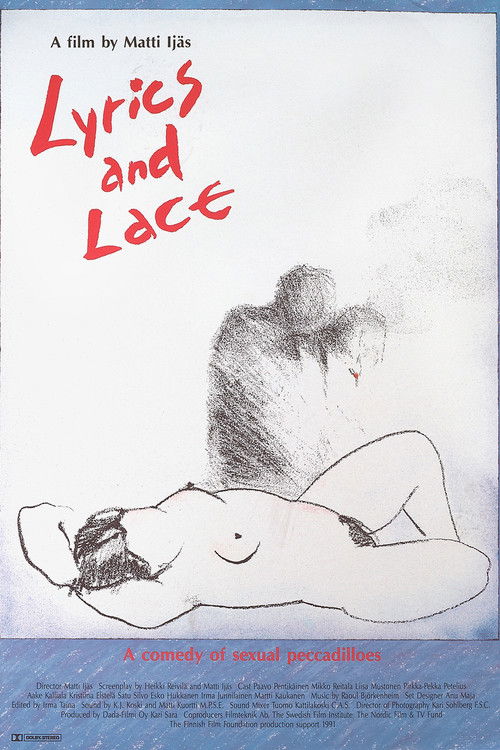
Lyrics and Lace serves as a character-driven social critique rather than a broad demographic showcase. Its strength lies in deconstructing social archetypes, particularly through a protagonist who lacks the typical competence expected of a cinematic hero. The film's limitations stem from its era and regional context, leading to a lack of racial and LGBTQ+ visibility. It remains a localized study of social alienation and intellectual eccentricity. Ultimately, the work challenges standard clichés by centering unsuccessful and socially unaligned individuals, providing a nuanced view of those outside traditional social orders.
Category Breakdown
The film does not include explicit representations of LGBTQ+ identities or same-sex relationships. It focuses on the relationship between a poet and his assistant without depicting non-straight relationships.
The story centers on male characters but avoids traditional stereotypes of strong masculinity. The protagonist is shown as clumsy and directionless, which subverts the usual portrayal of male authority figures.
The film reflects the demographic homogeneity typical of 1990s Nordic cinema. There is no indication of significant racial diversity or non-white casting in the production.
The narrative emphasizes intellectual observation and non-conformist perspectives over institutional success. By focusing on an outsider visiting small cultural centers, it highlights individualistic social critiques.
No specific physical or neurodivergent disabilities are explicitly mentioned. However, the protagonist's clumsy nature suggests a character who exists on the periphery of social norms and feels alienated.
Present on Screen
Limited or Absent
Official Synopsis
Like it or not, almost anyone who has met a really serious poet finds that they have something about them which sets them apart from other people. It's not just a romantic legend. In wry but basically directionless Finnish movie, Paavo Pentikainen plays one of these ungainly beings, a man whose last published work is decades in the past, who probably hasn't written anything in years, but who still has an uncanny knack for precise observation, "pinning the tail on the donkey" almost every time. In the movie, the poet, accompanied by his young assistant, takes a minor celebrity's swaggering tour of small cultural centers and retirement homes.
1998
2013
1994
1986
2003
1998
1988
2000
No reviews yet. Be the first to share your thoughts on this movie!
Use the rating form above to leave a star rating and optional review.