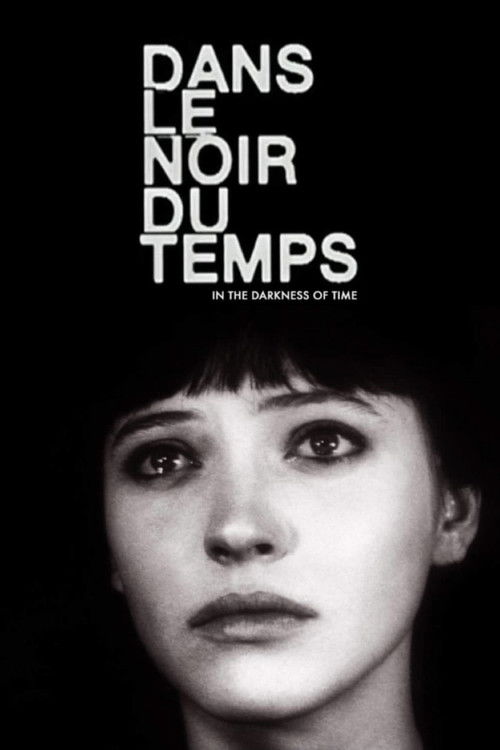
In the Darkness of Time
2002
No user ratings available yet
Diversity score: 5.8 out of 10

2001
PGDirector
Jean-Luc Godard
Runtime
99 minutes
Average Rating
No ratings yetSynopsis
Someone we hear talking - but whom we do not see - speaks of a project which describes the four key moments of love: meeting, physical passion, arguments/separation and making up. This project is to be told through three couples: young, adult and old. We do not know if the project is for a play, a film, a novel or an opera. The author of the project is always accompanied by a kind of servant. Meanwhile, two years earlier, an American civil servant meets with an elderly French couple who had fought in the Resistance during World War II, brokering a deal with a Hollywood director to buy the rights to tell their story. The members of the old couple's family discuss heatedly questions of nation, memory and history.
Overall Score
Fair
Category Breakdown
LGBTQ+ Representation
The film operates as a philosophical essay rather than a character study. It lacks explicit LGBTQ+ identities or non-heteronormative romantic arcs, focusing instead on the abstract essence of passion.
Gender Representation
Godard disrupts traditional gender hierarchies by avoiding standard romantic tropes. The film uses a fragmented gaze to investigate gendered images, though it lacks significant dialogue-driven agency for its female figures.
Racial & Ethnic Diversity
The narrative is centered on European history and the memories of a French couple. The cast and setting remain largely homogeneous, reflecting a specific historical and geographical context.
Religious & Cultural Diversity
The work excels in its critique of Western institutions and capitalism. It prioritizes intellectual inquiry and postmodern values, treating truth as a fragmented, subjective construct rather than an objective reality.
Disability Representation
There are no prominent depictions of visible or invisible disabilities. The film focuses on the relationship between sound, image, and memory rather than exploring neurodivergence or physical disability.
Strengths
Areas for Improvement
AI Analysis
Jean-Luc Godard’s *In Praise of Love* is an intellectual exercise that prioritizes formalist experimentation over social identity. While it avoids traditional demographic representation, it succeeds as a critique of how media and capitalism consume reality. The film's strength lies in its subversion of cinematic norms and its high level of cultural critique. It challenges the viewer to see truth as a subjective construct rather than a singular reality. However, the work remains limited by its narrow historical focus and lack of diverse character identities. It functions more as a philosophical inquiry into the nature of love and memory than a study of human diversity.
2002

2010

2004

2003

1975

2016

2012

1987

2023

1973

1965

2008
No reviews yet. Be the first to share your thoughts on this movie!
Use the rating form above to leave a star rating and optional review.