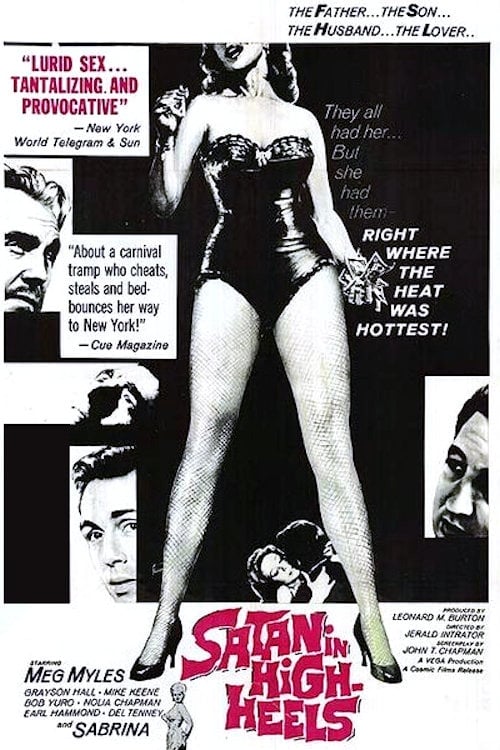
Satan in High Heels
1962
No user ratings available yet
Diversity score: 5.6 out of 10

1966
Director
Frans Weisz
Runtime
90 minutes
Average Rating
No ratings yetSynopsis
A successful young writer is in search of his true destiny. Is it the life with his wife and typewriter in Amsterdam or the offers to go to the dreamworld of the Italian film city Cinecittà which is luring him? Trying to find this out he goes into retreat in the house of a befriended gay couple in the south of France.
Overall Score
Fair
Category Breakdown
LGBTQ+ Representation
The film disrupts heteronormative expectations by centering the protagonist's retreat within the domestic sphere of a gay couple. These characters act as essential facilitators for his spiritual self-discovery rather than mere peripheral figures.
Gender Representation
The narrative explores the tension between domestic stability and professional ambition. While the protagonist's wife serves as a traditional anchor, the focus remains on the male protagonist's existential struggle with agency.
Racial & Ethnic Diversity
The production maintains a relatively homogeneous cast typical of 1960s European cinema. There is no evidence of significant racial blending or non-Anglo-Saxon majority casting within the narrative.
Religious & Cultural Diversity
The story prioritizes individualistic truth over societal expectations by deconstructing traditional life paths. The South of France setting encourages a fluid, secular exploration of destiny away from rigid social structures.
Disability Representation
There is no evidence of characters with visible or invisible disabilities within the film's context.
Strengths
Areas for Improvement
AI Analysis
A Gangstergirl stands out for its progressive handling of LGBTQ+ domesticity during a period of significant marginalization. By placing a gay couple at the heart of the protagonist's intellectual retreat, the film elevates their presence to a position of narrative importance. However, the film remains a product of its era, exhibiting a homogeneous racial profile and a focus on the male existential experience. The gender dynamics lean toward traditional roles, even as they explore complex psychological landscapes. Ultimately, the film's strength lies in its challenge to social hierarchies and its pursuit of individualistic morality, even if it lacks broader demographic variety.
1962
1962
1988

1985

2002

1967

1994
1975

1981
1982
1974
1967
No reviews yet. Be the first to share your thoughts on this movie!
Use the rating form above to leave a star rating and optional review.