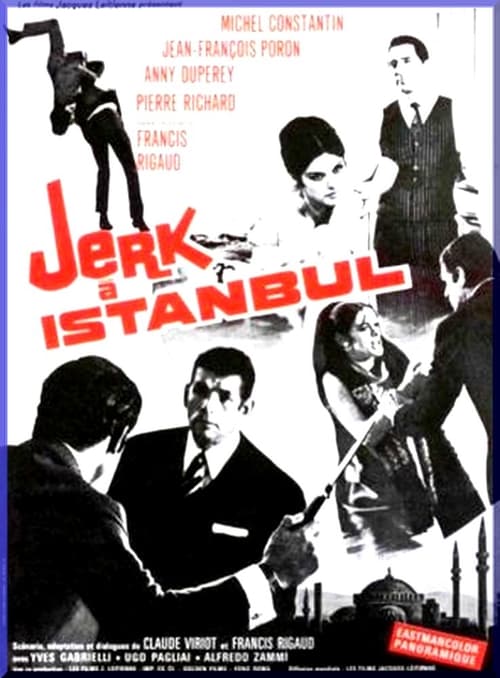
Jerk in Istanbul
1967
No user ratings available yet
Representation score: 2.5 out of 10

Representation Score
Fair
1985
Director
Marc Didden
Runtime
90 minutes
Average Rating
No ratings yetNew Showbiz Analysis
Istanbul is a character-driven drama that leans heavily on traditional mid-80s cinematic structures. The plot focuses on the psychological journey of two men, which limits the breadth of gender representation. While the setting offers potential for cultural the way different parts of someone's identity overlap, the film remains anchored in a male-centric perspective. The narrative explores identity through movement and the deconstruction of a dark past, yet it lacks explicit multi-layered complexity. Ultimately, the film provides thematic openings for non-traditional journeys without fully committing to a diverse or subversive representational framework.
Category Breakdown
The film explores a strong bond between Martin and Willy, suggesting a disruption of social norms. However, the narrative does not explicitly confirm their queer identity or romantic relationship.
Male characters play a central role in driving the story, while female characters seem to have secondary roles within a structure that emphasizes male-driven existential exploration.
The Istanbul setting and the inclusion of Amid Chakir provide ethnic diversity. The story sets up a framework for cultural interaction between Western characters and a non-Western location.
The narrative uses the drifter archetype to critique stable societal structures. Moving from Belgium to Istanbul allows for a pursuit of destabilizing truths.
There is no evidence of characters navigating physical or neurodivergent disabilities.
Present on Screen
Limited or Absent
Official Synopsis
Martin, a drifter, is on his way to Istanbul when he meets Willy, a student working in Belgium. Fascinated by Martin, Willy decides to go with him to Istanbul, but soon discovers pieces of his dark past.
1967

2007

2014
2008

2002
1999
2006

1990
No reviews yet. Be the first to share your thoughts on this movie!
Use the rating form above to leave a star rating and optional review.