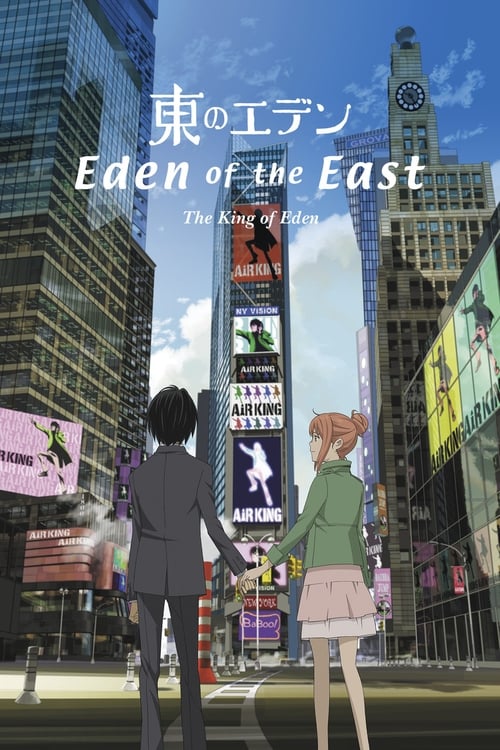
Eden of the East Movie I: The King of Eden
2009
No user ratings available yet
Representation score: 7.8 out of 10

Representation Score
Fair
2010
Not RatedDirector
Kenji Kamiyama
Runtime
93 minutes
Average Rating
No ratings yetNew Showbiz Analysis
Eden of the East Movie II: Paradise Lost is a sophisticated exploration of systemic failure and social intervention. It prioritizes a critique of institutional authority over a broad spectrum of diverse personal identities. The film's strength lies in its cultural commentary, using the Seleção system to challenge traditional governance. However, it remains limited by a lack of LGBTQ+ and racial diversity, focusing on a specific Japanese context. Ultimately, the work succeeds as a deconstruction of power hierarchies, even if it lacks breadth in representing diverse personal identities.
Category Breakdown
The film does not feature prominent LGBTQ+ characters or non-cisgender identities. Relationships and interactions center around the main characters within a straight-focused framework.
Female characters play key roles and drive the plot forward. Saya Takashiro avoids submissive stereotypes, taking an active part in shaping the central conflict.
The cast is primarily made up of characters from similar backgrounds, reflecting a near-future Japanese society. The story focuses on a specific socioeconomic environment rather than a diverse range of ethnicities.
The narrative effectively critiques centralized power and Western-style institutions through high-tech vigilantism and moral relativism. It challenges established government structures.
The film does not significantly address visible or invisible disabilities. Characters are defined by their socioeconomic status and technological relationships rather than physical or neurological differences.
Present on Screen
Limited or Absent
Official Synopsis
Accused of terrorism and feeling the heat, Saki's high-tech crew is in the crosshairs. Meanwhile, the shroud of mystery covering Takizawa is lifted as he and his fellow Selecao make their final moves. Every game must come to an end. For those playing Mr. Outside's twisted game of conspiracy thrills, the end comes now.
2009
2006

2009

2017

2005

2007
No reviews yet. Be the first to share your thoughts on this movie!
Use the rating form above to leave a star rating and optional review.