Burst City
1982
No user ratings available yet
Representation score: 7.2 out of 10
Representation Score
Fair
2014
RDirector
Sion Sono
Runtime
116 minutes
Average Rating
No ratings yetNew Showbiz Analysis
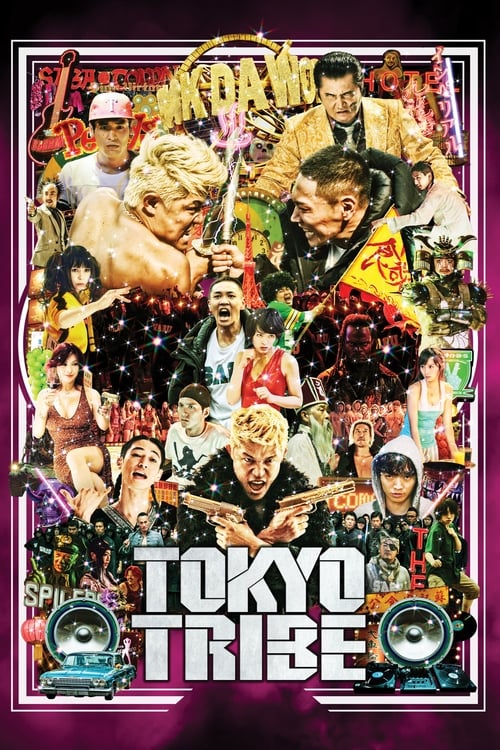
Tokyo Tribe succeeds in deconstructing traditional Japanese social hierarchies by replacing national identity with fragmented, subcultural tribalism. This shift allows for a unique exploration of group identity and ability to act outside of state-sanctioned norms. However, the film remains heavily anchored in masculine-coded gang dynamics and territorial warfare. This focus limits the breadth of gender representation and leaves the specific inclusion of LGBTQ identities or disability representation unaddressed. Ultimately, the work functions as a stylistic critique of social stability, favoring the chaos of identity-driven subcultures over institutional preservation.
Category Breakdown
The film explores non-traditional social structures through its gang-based tribalism. While specific LGBTQ identities are not explicitly detailed, the rejection of conventional norms suggests a landscape where straight relationships are secondary to tribal identity.
The narrative focuses heavily on gang leadership and territorial warfare, which favors masculine archetypes. While character roles are tied to tribal affiliation rather than traditional gender roles, the primary conflict centers on male-coded dynamics.
The film presents an alternate Japanese reality that functions as a microcosm of fragmented identities. Using tribes as a narrative device provides a metaphorical framework for diverse ethnic and cultural groupings.
The film demonstrates high engagement with themes that challenge traditional institutions. It prioritizes tribal loyalty over state authority, framing the established order as something to be manipulated or overthrown.
There is no discernible evidence regarding the portrayal of physical or neurodivergent disabilities within the narrative.
Present on Screen
Limited or Absent
Official Synopsis
In an alternate Japan, territorial street gangs form opposing factions collectively known as the Tokyo Tribes. Merra, leader of the Wu-Ronz tribe of Bukuro, joins forces with heavy-hitting gangster Buppa of Buppa Town. With Buppa's support, Merra aims to initiate a gang war between the Wu-Ronz and the Musashino Saru, and in a confrontation between the two attempts to kill Kai of the Musashino Saru. The inadvertent murder of Kai's friend Tera (a Musashino Saru member beloved by all Tribes since before their formation) leads to the joining of forces between all of the Tribes in an all-out war against Merra and Buppa.
1982

2013
2016
1999
2015

2015
2001

2012
No reviews yet. Be the first to share your thoughts on this movie!
Use the rating form above to leave a star rating and optional review.