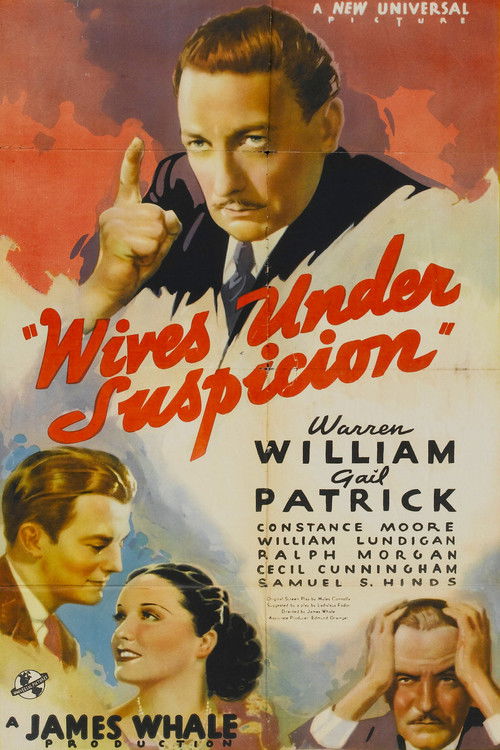
Wives Under Suspicion
1938
No user ratings available yet
Representation score: 0.4 out of 10

Representation Score
Limited
1933
NRDirector
James Whale
Runtime
69 minutes
Average Rating
No ratings yetNew Showbiz Analysis
The film operates as a traditional period drama centered on domestic tragedy and legal ethics. The main narrative elements—infidelity and a crime of passion—align with conventional mid-century dramatic structures rather than characters who reflect more than one aspect of diversity. While the director's history suggests a capacity for challenging social norms, the specific plot elements focus on established clichés of the era. The absence of diverse character-level detail limits the presence of underrepresented identities. Overall, the film prioritizes psychological tension and moral ambiguity over a diverse or inclusive cast.
Category Breakdown
The story focuses on marital infidelity within a heterosexual marriage. Although there are hints at underlying identities, there are no explicit LGBTQ+ characters or stories.
The plot centers around a wife's affair and her husband's violent response. This scenario offers opportunities to explore female autonomy within restrictive social settings.
The film likely adheres to the homogenous casting practices common in 1933. There is no indication of non-white or non-Anglo-Saxon majority casting.
The story delves into situational ethics and moral relativism through a legal defense. It may subtly challenge absolute morality by highlighting the corruption within the domestic sphere.
There is no information about the depiction of physical or neurodivergent characters in this film.
Present on Screen
Limited or Absent
Official Synopsis
When a famous doctor kills his adulterous wife, he is defended by his best friend, an attorney who suspects that his own wife is having an affair.
1938
1947
1939
1944
1939
1937
1934
1933
No reviews yet. Be the first to share your thoughts on this movie!
Use the rating form above to leave a star rating and optional review.