Caché
2005
No user ratings available yet
Representation score: 3.8 out of 10
Representation Score
Fair
1990
Director
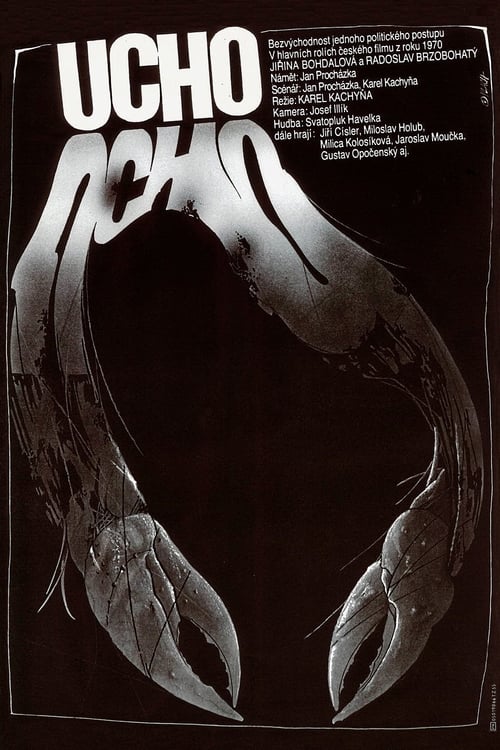
Karel Kachyňa
Runtime
95 minutes
Average Rating
No ratings yetNew Showbiz Analysis
The film 'The Ear' prioritizes a historical and systemic critique of totalitarianism over broad demographic representation. It excels in dissecting the psychological toll of living under a repressive regime within a domestic setting. However, the movie lacks representation across many contemporary identity categories. Its focus is solely on the white, straight-centered elite of mid-century Czechoslovakia, offering minimal diversity in terms of race, sexuality, or disability. Ultimately, the film's strength lies in its cultural commentary on state oppression. It prioritizes a deep, claustrophobic examination of how centralized power affects individuals and families over a wider range of social representation.
Category Breakdown
The film centers on a straight and cisgender family unit, with no queer narratives or non-cisgender identities included.
It challenges traditional male dominance by depicting the male official as psychologically vulnerable. The female protagonist actively engages with his instability rather than passively observing.
The cast mirrors the homogeneous demographics of 1950s Czechoslovakia, accurately reflecting the Communist Party elite but lacking any racial or ethnic diversity.
The film critiques institutional power and state authority, showing the Communist Party as a corrosive force that undermines individuals through psychological manipulation.
Psychological instability is portrayed as a result of political paranoia, rather than exploring neurodivergence. The psychological distress serves the political narrative without addressing identity-based issues.
Present on Screen
Limited or Absent
Official Synopsis
Government bureaucrat Ludvik becomes suspicious after several colleagues disappear and he overhears something strange at a cocktail party. Returning home with his wife, Anna, he finds their house under surveillance and spends a fraught night worrying about his possible arrest in the morning. Marital difficulties come to light as Ludvik and his wife attempt to act normal in front of the cameras while dredging up their problems out of sight.
2005
1970

1943
1983
2010

1994
1961
1969
No reviews yet. Be the first to share your thoughts on this movie!
Use the rating form above to leave a star rating and optional review.