Black Girl
1966
No user ratings available yet
Representation score: 4.8 out of 10
Representation Score
Fair
1973
Director
Med Hondo
Runtime
104 minutes
Average Rating
No ratings yetNew Showbiz Analysis
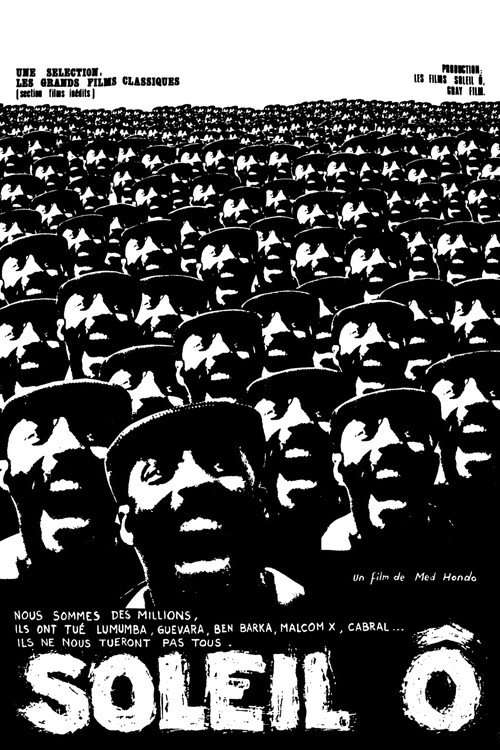
Med Hondo’s Soleil O is a seminal work of Third Cinema that dismantles the colonial gaze. It shifts the cinematic focus from the Western metropole to the lived realities of the African diaspora and systemic exploitation. The film succeeds by restructuring power dynamics rather than seeking mere inclusion. It uses a fragmented narrative to critique neo-colonialism and the 'independence myth,' making the African experience the central driving force. While the film excels in racial and cultural critique, it lacks specific representation for LGBTQ+ identities and provides no clear data regarding disability representation.
Category Breakdown
The film focuses on socioeconomic and post-colonial struggles. There are no queer narratives or non-cisgender identities present.
The film offers a nuanced look at gendered experiences in urban environments. By centering a sex worker, it avoids romanticized clichés to highlight economic necessity.
The film achieves exceptional representation by centering an entirely Black cast. It prioritizes the perspectives of the Global South and the ability to act of African characters.
The story provides a rigorous critique of Western institutional power and capitalism. It portrays the relationship between Western capital and local elites as inherently corruptive.
There is insufficient evidence to provide a definitive score regarding the representation of physical or neurodivergent disabilities.
Present on Screen
Limited or Absent
Official Synopsis
An educated native of Mauritania tries to find work in Paris but encounters difficulty because of his race.
1966
1973

1979
1965
1970

1978
1993

1976
No reviews yet. Be the first to share your thoughts on this movie!
Use the rating form above to leave a star rating and optional review.