
Diana
2009
No user ratings available yet
Representation score: 7.2 out of 10
Representation Score
Good
2005
Director
Yogesh Bharadwaj
Runtime
165 minutes
Average Rating
No ratings yetNew Showbiz Analysis
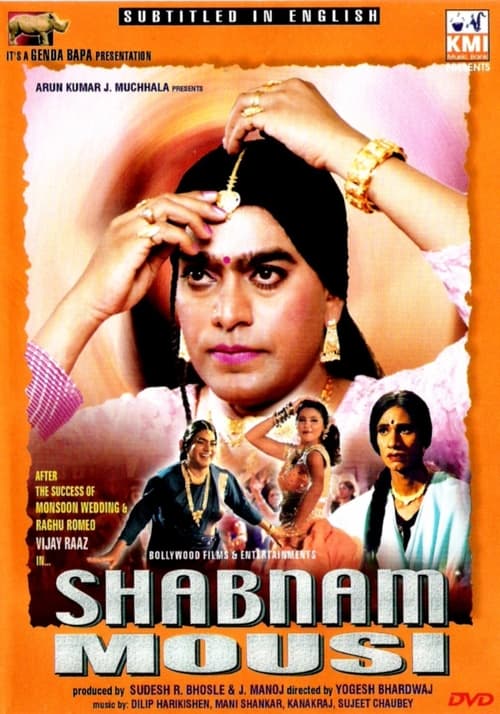
Shabnam Mausi is a powerful work of social realism that uses a biographical lens to deconstruct systemic barriers. The film refuses to treat its protagonist as a passive victim, instead positioning their identity as a catalyst for institutional change. The narrative effectively challenges both gender and political hierarchies. By following a Hijra individual's journey into public office, the film provides a sophisticated critique of how traditional bureaucracies exclude underrepresented identities. While the film focuses heavily on gender and community identity, it remains a deeply localized study of social stratification, offering a nuanced perspective on how identity intersects with political power in India.
Category Breakdown
The film centers a Hijra protagonist who play a significant role in driving the story, showing a non-binary individual challenging traditional expectations of leadership. It moves beyond spectacle to highlight the disruption of straight-centered assumptions.
By placing a gender-nonconforming individual in a position of institutional authority, the film challenges traditional patriarchal hierarchies. It deconstructs the idea that authority is tied to biological sex.
The narrative provides a detailed look at the Hijra community, avoiding homogeneous portrayals of Indian society. It highlights specific social stratifications within the broader ethnic landscape.
The story critiques corrupt political institutions and traditional power structures, framing the protagonist's rise as a means to dismantle systemic graft and challenge oppressive state apparatuses.
There is no evidence within the film's narrative to address the depiction of physical or neurodivergent disabilities.
Present on Screen
Limited or Absent
Official Synopsis
Inspired by the true story of Shabnam Mausi who overcame prejudice and became the first Hijra to be elected to public office in India. Shabnam (Ashutosh Rana) was born to a wealthy and privileged family, but when a band of eunuchs came to bless him not long after he was born, they discovered he too was a Hijra, and the infant was sent to live with others of his kind. Shabnam still has the love and support of his family, but not all the other hijras are so lucky, and one of the members of the group (Vishwajeet Padhan) kills Shabnam's brother in a fit of rage. Shabnam is blamed for the crime, and goes underground, relocating to a town where he comes to the rescue of a woman being sexually assaulted by a group of men. Shabnam's heroic act makes him a minor celebrity in the village, and he decides to use his new recognition to help drive a corrupt politician (Govind Namdeo) from office in an upcoming election.
2009
1984
2010

2022
2003
2004

2010
2012
No reviews yet. Be the first to share your thoughts on this movie!
Use the rating form above to leave a star rating and optional review.