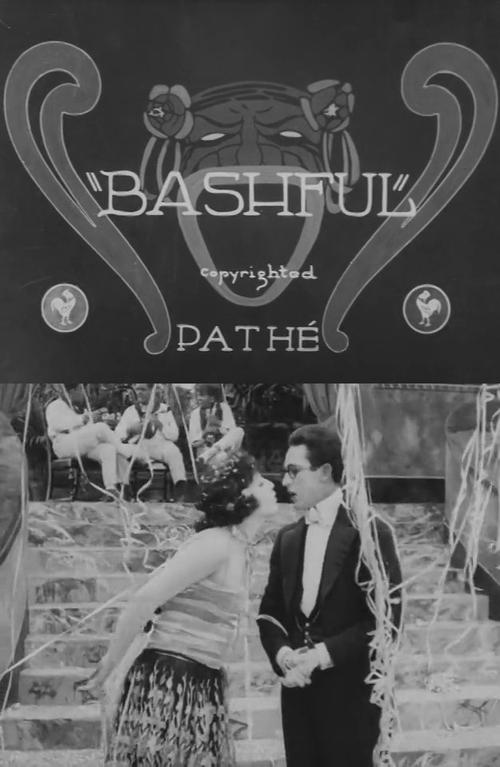
Bashful
1917
No user ratings available yet
Diversity score: 2.2 out of 10

1925
PassedDirector
Alfred J. Goulding
Runtime
60 minutes
Average Rating
No ratings yetSynopsis
A sailor and his would-be bride search their train for a clergyman to marry them.
Overall Score
Minimal
Category Breakdown
LGBTQ+ Representation
The film follows a traditional heteronormative romantic structure between a sailor and his bride. There is no evidence of non-cisnormative identities or critiques of heteronormativity.
Gender Representation
The story utilizes traditional 1920s gender roles. While the female lead shows agency in searching for a clergyman, the conflict centers on the social necessity of marriage.
Racial & Ethnic Diversity
The film likely reflects the homogeneous casting standards of 1925. There is no evidence of diverse casting or race-bent roles within the narrative.
Religious & Cultural Diversity
The plot reinforces traditional Western institutions like marriage and organized religion. The pursuit of a clergyman suggests a narrative aligned with conservative early 20th-century cultural frameworks.
Disability Representation
The synopsis provides no evidence of characters with physical, neurodivergent, or sensory disabilities.
Strengths
Areas for Improvement
AI Analysis
Excuse Me is a period-typical silent comedy that operates within the established cultural norms of the mid-1920s. The narrative architecture prioritizes situational absurdity and kinetic movement over complex social commentary or identity-driven storytelling. The film reinforces traditional social and religious structures rather than disrupting them. It lacks the intersectional complexity or the subversion of systemic hierarchies required for a higher progressive rating. Ultimately, the work functions as a standard slapstick piece of its era, focusing on a couple's pursuit of social legitimacy through religious ritual.
1917
1919
1919

1929
1918

1921
1935

1924
1952
1937

1923
1935
No reviews yet. Be the first to share your thoughts on this movie!
Use the rating form above to leave a star rating and optional review.