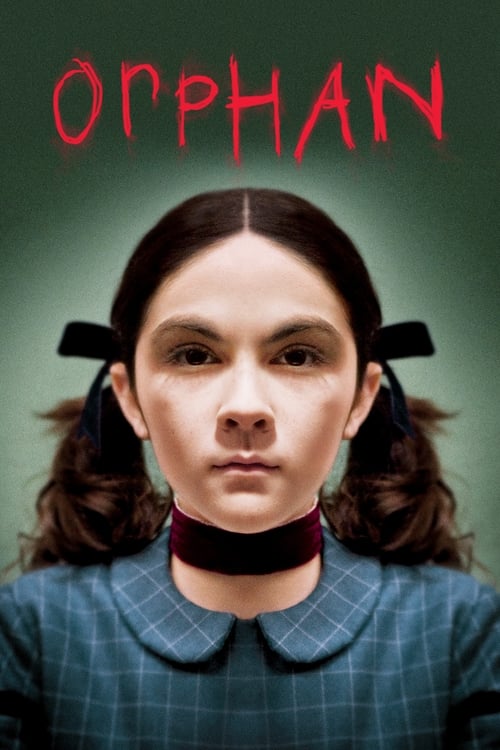
Orphan
2009
No user ratings available yet
Representation score: 3.1 out of 10

Representation Score
Good
2023
RDirector
Rubin Stein
Runtime
119 minutes
Average Rating
No ratings yetNew Showbiz Analysis
Tin & Tina is a psychological thriller that finds its strength in subverting traditional social structures. By centering the narrative on two atypical children, the film moves away from conventional clichés of childhood innocence to explore complex themes of religious influence and cognitive processing. The film's most effective element is its cultural critique. It uses the siblings' literalist religious upbringing to challenge the sanctity of the nuclear family and Western ideals of nurtured childhood. This provides a sophisticated layer of psychological depth. However, the film remains demographically narrow. It lacks LGBTQ+ representation and maintains a homogeneous social setting, focusing its energy on psychological tension rather than broad social or racial diversity.
Category Breakdown
The film lacks prominent LGBTQ+ characters or narratives. The story focuses almost exclusively on the psychological tension between the siblings and their immediate social circle.
Gender dynamics are explored through Julia, who becomes the target of the siblings' intrusive gaze. The film uses gender as a tool in a power struggle rather than a theme of empowerment.
Set in an urban Argentinian context, the film depicts a largely homogeneous middle-class environment. It avoids harmful stereotypes but does not actively work to diversify the cast.
The film offers a sharp critique of ultra-Catholicism through children who interpret scripture with literalist fervor. It deconstructs traditional family sanctity by presenting moral relativism as a psychological reality.
The siblings exhibit behaviors associated with neurodivergence, such as hyper-fixation and social detachment. They are portrayed who play a significant role in driving the story, serving as the primary drivers of the film's horror.
Present on Screen
Limited or Absent
Official Synopsis
After a traumatic miscarriage, Lola and her husband, Adolfo, adopt Tin and Tina, a lovely albino brother and sister with an ultra-Catholic education that makes them interpret the Holy Bible verbatim.
2009
1976
1992
2007
1995

2006

2019
2017
No reviews yet. Be the first to share your thoughts on this movie!
Use the rating form above to leave a star rating and optional review.