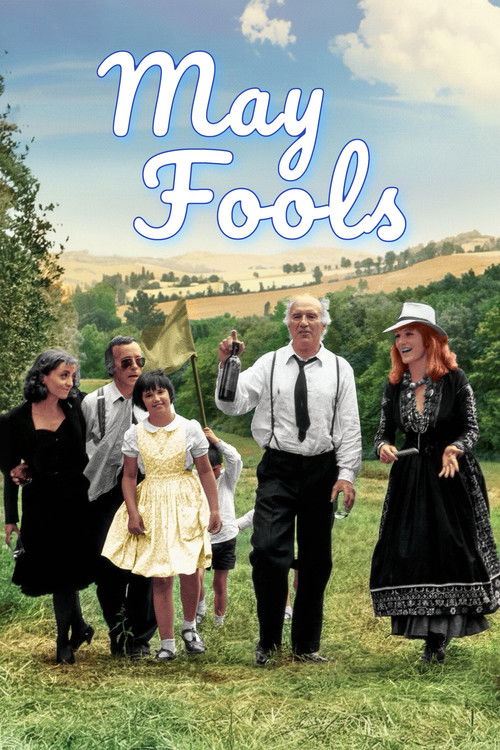
May Fools
1990
No user ratings available yet
Representation score: 5.7 out of 10
Representation Score
Fair
2025
Director
Lionel Baier
Runtime
90 minutes
Average Rating
No ratings yetNew Showbiz Analysis
The film serves as a sophisticated period piece that uses historical events to challenge conventional social structures. It leverages the turmoil of the 1968 protests to question the stability of the traditional family unit. Director Lionel Baier explores how identity and individual influence are shaped during times of systemic change. The film goes beyond simple historical reminiscence to examine unconventional domestic life. While the film excels in cultural framing and reimagining family archetypes, its historical setting and cast composition restrict its representation of racial and disability issues.
Category Breakdown
The film explores diverse identities through the social changes of May 1968. Although specific romantic relationships aren't detailed, the historical context offers a platform for discussing non-traditional domestic arrangements.
A multi-generational household with uncles and a great-grandmother disrupts the typical nuclear family structure. This setup challenges traditional gender roles during a time of political activism among men.
Set in 1968 Paris, the film's historical accuracy might limit its racial diversity. However, the inclusion of diverse actors like Aurélien Gabrielli indicates an effort to avoid uniform representations.
The film critiques traditional Western institutions through anti-establishment themes. By focusing on a 'safe house' during widespread unrest, it emphasizes situational ethics over strict institutional rules.
There is no explicit depiction of physical or neurodivergent disabilities in the film. Any assessment would be speculative and potentially inaccurate.
Present on Screen
Limited or Absent
Official Synopsis
An eccentric family portrait set during the May 1968 protests in Paris. A nine-year-old boy stays with his grandparents and uncles while his parents protest. When an illustrious guest seeks refuge in the apartment, the family’s dynamics change.
1990

2014

2008

1967

2011
2013

1997

2016
No reviews yet. Be the first to share your thoughts on this movie!
Use the rating form above to leave a star rating and optional review.