
Winter on Fire: Ukraine's Fight for Freedom
2015
No user ratings available yet
Representation score: 7.2 out of 10
Representation Score
Good
2014
Director
Amir Amirani
Runtime
104 minutes
Average Rating
No ratings yetNew Showbiz Analysis
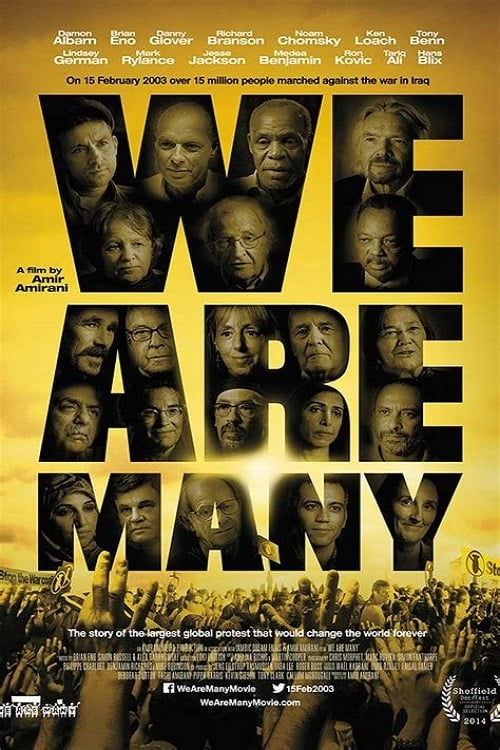
We Are Many shifts the historical lens away from state actors and toward the collective ability to act of global citizens. By documenting the massive February 2003 protests, the film prioritizes grassroots resistance over top-down political narratives. The documentary excels at portraying a global, multi-ethnic response to geopolitical decisions. It successfully frames the protest movement as an multi-layered human experience that challenges Western military dominance. However, the film lacks specific focus on individual identity markers like LGBTQ+ arcs or disability representation. The narrative remains centered on the scale of the mass mobilization rather than specific underrepresented personal stories.
Category Breakdown
The film does not have specific storylines focused on LGBTQ+ characters. Instead, it captures a broad range of human experiences during a major geopolitical event.
The documentary highlights that political action is not limited to men. It showcases women's involvement in the global anti-war movement, challenging traditional hierarchies.
The film features a diverse, multi-ethnic cast of participants. It emphasizes an interconnected human experience that goes beyond traditional racial and national boundaries.
The narrative critiques Western military intervention and state-driven nationalism. It centers the voices of the people against the machinery of government-led conflict.
There is no specific evidence regarding the portrayal of disability within this documentary's scope.
Present on Screen
Limited or Absent
Official Synopsis
The story of the biggest demonstration in human history, which took place on 15th February 2003, against the impending war on Iraq.
2015

2013

2010

2011

2014

2012

2012

2012
No reviews yet. Be the first to share your thoughts on this movie!
Use the rating form above to leave a star rating and optional review.