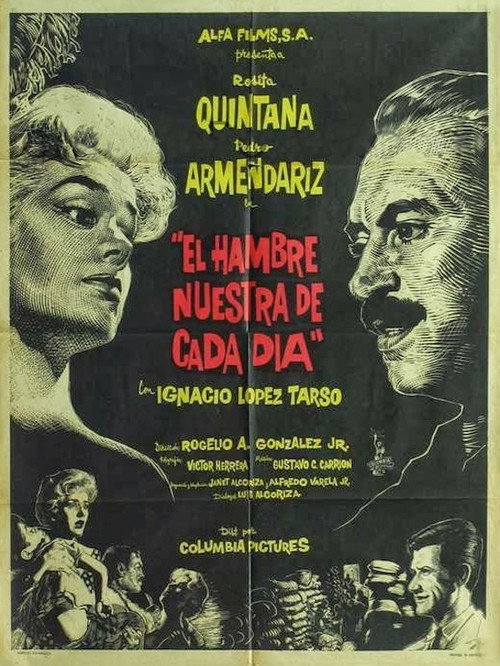
Our Daily Hunger
1960
No user ratings available yet
Representation score: 5.4 out of 10
Representation Score
Limited
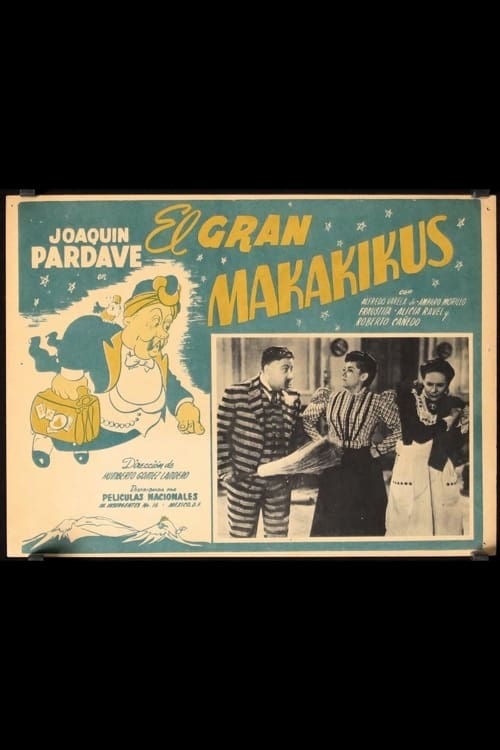
1944
Director
Humberto Gómez Landero
Runtime
104 minutes
Average Rating
No ratings yetNew Showbiz Analysis
El Gran Makakikus serves as a satirical critique of social hierarchies. By drawing from Molière's themes, the film focuses on the performative nature of class and the tension between different social strata. However, the 1944 production era and limited character data limit the visibility of diverse identities. The film’s diversity is primarily expressed through its social commentary rather than explicit representation of underrepresented groups.
Category Breakdown
The film does not include any characters with LGBTQ+ identities or critiques of the assumption that everyone is straight or cisgender. There are no specific character details that address these issues.
The film likely adheres to traditional gender roles typical of the 1944 period. While satire can challenge expectations, women's ability to drive the story and masculinity play secondary roles to the main theme of class conflict.
As a Mexican production, the cast likely includes Mestizo or Latin American identities. The setting may reflect Eurocentric standards, although the narrative might challenge Anglo-centric social norms.
The film uses satire to mock high society and the pursuit of status. This approach dismantles traditional aristocratic values and highlights the absurdity of class-based elitism.
There are no characters with visible or invisible disabilities mentioned in the available synopsis or verified context.
Present on Screen
Limited or Absent
Official Synopsis
Uncultured nouveau- riche wants to be received in high society. Loose adaptation of Moliere.
1960
1939
1951
1948
1942

1940

1962
1949
No reviews yet. Be the first to share your thoughts on this movie!
Use the rating form above to leave a star rating and optional review.