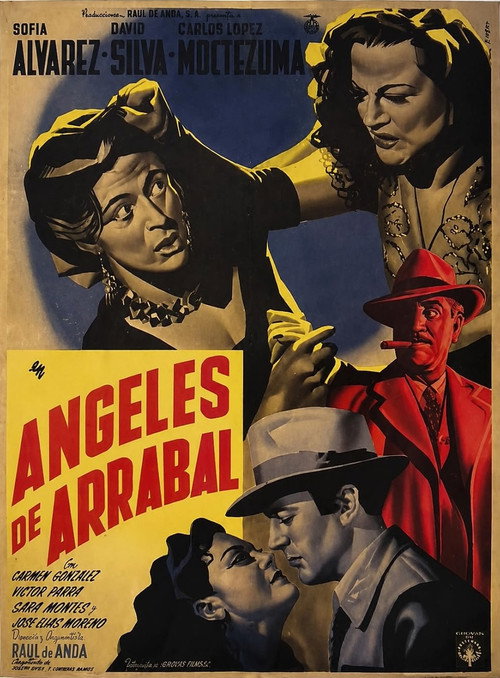
Ángeles de arrabal
1949
No user ratings available yet
Representation score: 3.7 out of 10
Representation Score
Limited
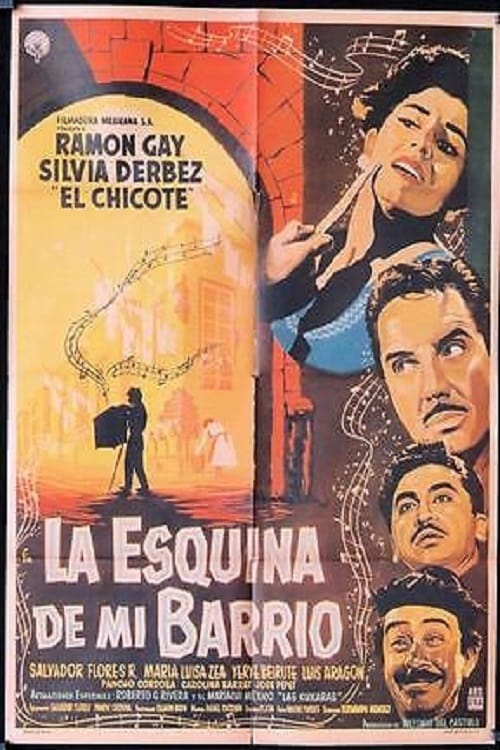
1957
Director
Fernando Méndez
Runtime
89 minutes
Average Rating
No ratings yetNew Showbiz Analysis
La esquina de mi barrio stands as a significant cultural document of Mexican urban realism. Its strongest point is its authentic depiction of the urban working-class population, offering a localized, non-Anglo-centric viewpoint. However, the film adheres closely to the social and gender norms of the 1950s. It reflects the societal standards of its time without challenging them, unlike more progressive modern films. While it provides a vivid picture of economic hardships, it does not actively dismantle patriarchal or straight-centered structures.
Category Breakdown
The film follows traditional romantic storylines typical of 1957 Mexican melodrama. It does not include any LGBTQ+ identities or narratives that question the assumption that everyone is straight.
Female characters likely play key roles in the emotional storyline but are limited by the gender norms of the time. They often serve within domestic settings or as subjects of romantic drama rather than having significant control over events.
The film successfully highlights a predominantly Mexican/Mestizo cast, avoiding the common issue of whitewashing by focusing on the experiences of the urban working-class population.
The setting is deeply influenced by traditional Western and Catholic social structures. The narrative emphasizes the importance of community, family, and religious morality typical of its era.
There are no specific details about the portrayal of physical or neurodivergent disabilities.
Present on Screen
Limited or Absent
Official Synopsis
Two young sweethearts get tangled up with a bad guy and a stolen necklace.
1949

1951
1937
1954
1961
1949
1968
1951
No reviews yet. Be the first to share your thoughts on this movie!
Use the rating form above to leave a star rating and optional review.