
Apollo 17: The Untold Story of the Last Men on the Moon
2011
No user ratings available yet
Representation score: 3.2 out of 10
Representation Score
Minimal
2014
Director
Elliot Weaver, Zander Weaver
Runtime
104 minutes
Average Rating
No ratings yetNew Showbiz Analysis
This documentary serves as a technical chronicle of the Apollo 13 mission, emphasizing historical accuracy and archival preservation. Given its focus on the 1970s space program, the film naturally reflects the era's lack of social diversity. The narrative structure highlights Western institutional triumph and masculine leadership. While it effectively documents a major technological milestone, it does not challenge the historical status quo or introduce diverse perspectives. Ultimately, the film operates as a traditional historical record. It captures the ingenuity of the mission without addressing the systemic exclusions present in the original NASA environment.
Category Breakdown
The documentary focuses on the technical and logistical crisis of the Apollo 13 mission. It does not include any LGBTQ+ characters or stories about non-cisgender identities.
The story centers on male astronauts and engineering teams, reinforcing traditional masculine leadership roles common in the 1970s aerospace industry.
The film recounts a historical event where the astronaut corps lacked racial diversity. It highlights the homogeneity of the era's space program.
The film celebrates Western scientific achievements and NASA's institutional expertise. It emphasizes a narrative of state-sponsored engineering and Western technological success.
Physiological challenges like dehydration and freezing temperatures are shown as environmental hazards. There is no depiction of permanent disabilities or neurodivergence.
Present on Screen
Limited or Absent
Official Synopsis
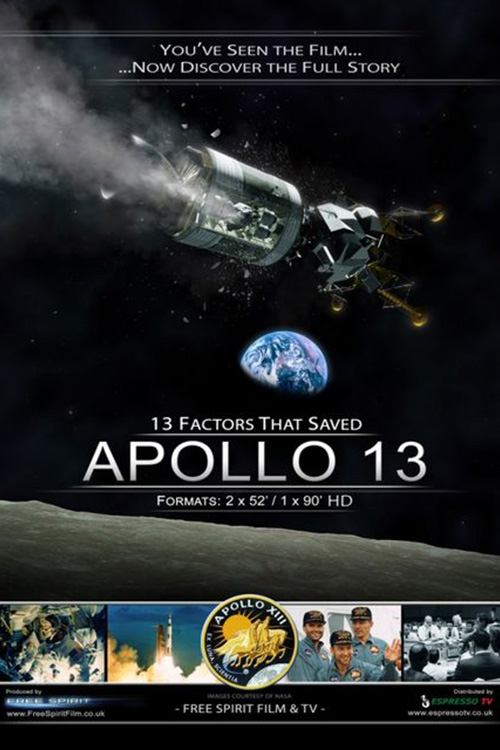
April 13th, 1970, 180,000 miles from Earth, a devastating malfunction leaves Apollo 13 leaking previous oxygen and its crew of three astronauts facing a life and death crisis. If Mission Control cannot find a way to bring Apollo 13 home, the astronauts will be stranded 200,000 miles from Earth in their dying ship. Now with limited power and supplies on board the spacecraft, the ground teams work around the clocking, engineering creative solutions to overcome carbon dioxide poisoning, dehydration and the freezing temperatures of deep space, to ensure the crew's survival. Using spectacular NASA footage, exclusive interviews with Apollo space scientists and stunning visual effects; this film explores the thirteen remarkable factors that brought the crew safely home, and the full story of the courage and ingenuity that cemented Apollo 13 as NASA's finest hour.
2011

2007
1996

2019

1995

1989

2016

2013
No reviews yet. Be the first to share your thoughts on this movie!
Use the rating form above to leave a star rating and optional review.