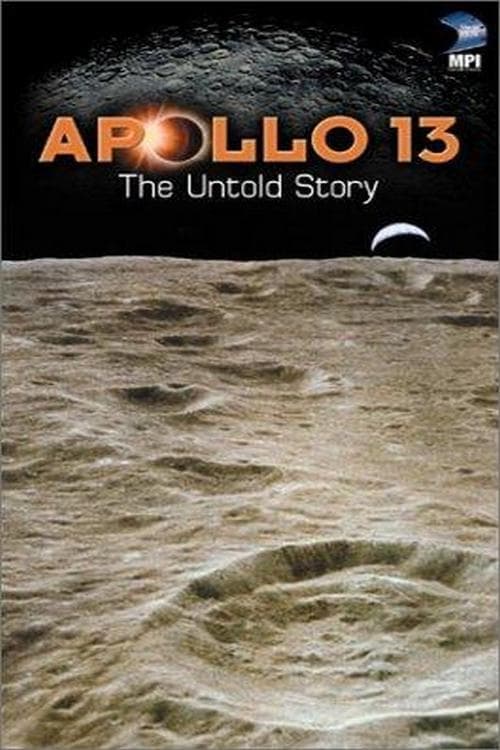
Apollo 13: The Untold Story
1995
No user ratings available yet
Representation score: 0.9 out of 10
Representation Score
Minimal
1996
Director
Lagniappe
Runtime
58 minutes
Average Rating
No ratings yetNew Showbiz Analysis
Lost Moon: The Triumph of Apollo 13 serves as a traditional historical record that prioritizes mid-century institutional narratives. It captures the technical and human drama of the Apollo 13 mission through a lens of historical accuracy. However, this accuracy reinforces the social hierarchies of the era, mirroring the lack of racial and gender diversity inherent in the 1970s space program. The documentary presents a demographic landscape that is largely homogeneous. While it provides a detailed look at NASA's technical triumphs, it offers a conventional perspective rather than a subversive one, focusing on the success of established Western scientific institutions.
Category Breakdown
The documentary focuses on the historical reality of the 1970 space program. There are no characters or narratives exploring LGBTQ+ identities.
The narrative centers on the male-dominated environments of NASA and the astronaut crew. Women like Marilyn Lovell appear, but they mainly serve as supportive family figures.
The film reflects the demographic homogeneity of the 1970s aerospace industry. There is no evidence of racial diversity within the astronaut corps or mission control.
The film celebrates Western technological achievement and institutional competence. It portrays the mission as a victory for Western scientific progress and established national institutions.
There are no specific mentions of characters or subjects navigating visible or invisible disabilities within the documentary.
Present on Screen
Limited or Absent
Official Synopsis
The making of the motion picture "Apollo 13", as well as the story of the space mission it details. Featuring interviews with director Ron Howard, astronaut Jim Lovell, his wife Marilyn Lovell, producer Brian Grazer, executive producer Todd Hallowell, visual effects supervisor Robert Legato, lead digital compositor Mark Forker, astronauts Fred Haise and Dave Scott, Apollo 13 flight director Gerald Griffin, command module systems controller Sy Lieberglot, Apollo 13 flight dynamics officer Jerry Bostick, mission control director Gene Krantz, Tom Kelly of Grumman, NASA mission operations director Christopher Kraft, daughters Susan Lovell Williams and Margaret Haise, command systems module controller John Aaron, and actors Tom Hanks, Bill Paxton, Kevin Bacon, Gary Sinise, Kathleen Quinlan, and Ed Harris.
1995

2007
2015
1989
2017
2011
2011
2013
No reviews yet. Be the first to share your thoughts on this movie!
Use the rating form above to leave a star rating and optional review.