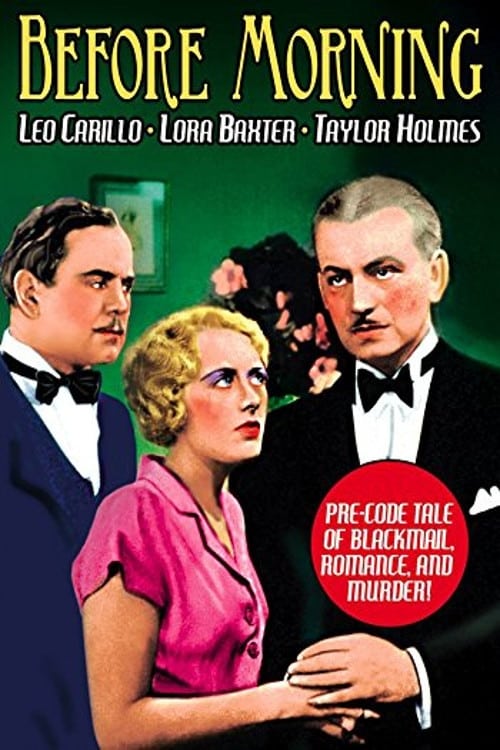
Before Morning
1933
No user ratings available yet
Representation score: 1.1 out of 10

Representation Score
Minimal
1931
NRDirector
Richard Thorpe
Runtime
64 minutes
Average Rating
No ratings yetNew Showbiz Analysis
Grief Street is a standard early sound-era crime mystery that adheres closely to the studio system paradigms of 1931. The narrative focuses on a locked-room murder investigation, prioritizing genre clichés over social subversion. The film lacks depth in reflecting multiple aspects of identity, reflecting the homogeneous casting and storytelling standards of its time. While the inclusion of a female reporter offers a minor degree of professional ability to act, the broader themes remain rooted in traditional hierarchies. Ultimately, the film serves as a conventional genre exercise rather than a work that challenges the cultural or social status quo of the early 20th century.
Category Breakdown
The film does not include any LGBTQ+ characters or narratives. It operates within the standard heterosexual and cisgender archetypes typical of 1931 studio productions.
A female reporter provides a hint of professional ability to act within the investigation. However, the plot centers on a philandering male actor, reinforcing traditional gender hierarchies.
The production likely reflects the white-centric casting standards of early 1930s Hollywood. There is no indication of diverse racial or ethnic representation in the narrative.
The story functions as a conventional mystery focused on logic and social order. It upholds traditional notions of justice without challenging prevailing cultural norms.
There is no evidence of characters with visible or invisible disabilities. The film does not appear to use impairment as a narrative or character element.
Present on Screen
Limited or Absent
Official Synopsis
A reporter helps the police investigate the murder of a disagreeable and philandering actor who is found strangled to death in his theater dressing room with its door and window locked from the inside.
1933
1944
1938
1935
1931
1929
1939
1933
No reviews yet. Be the first to share your thoughts on this movie!
Use the rating form above to leave a star rating and optional review.