Piovono mucche
2003
No user ratings available yet
Representation score: 3.1 out of 10
Representation Score
Fair
1989
Director
Umberto Angelucci, Stefano Benni
Average Rating
No ratings yetNew Showbiz Analysis
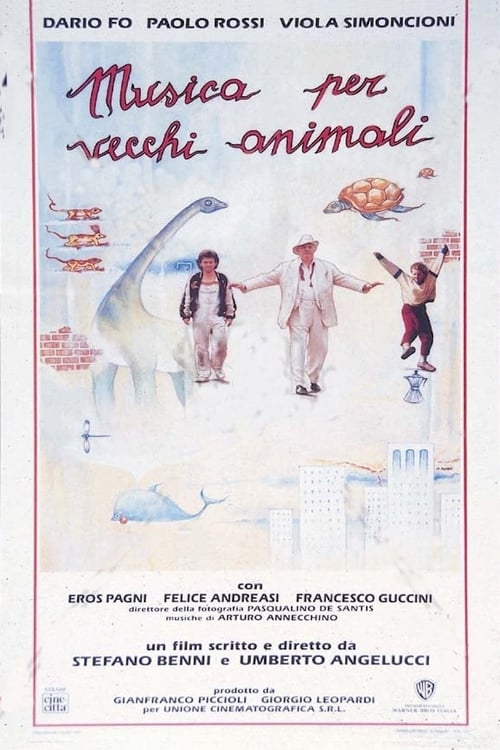
Musica per vecchi animali uses satire to critique social structures, employing surreal comedy to challenge institutional authority and traditional hierarchies. The film effectively uses absurdity to provide a strong cultural critique. However, its 1989 production context limits its racial diversity and explicit LGBTQ+ representation. While it likely undermines traditional masculine dominance, there is no specific evidence of meaningful women's ability to drive the story or disability representation.
Category Breakdown
The film likely uses satire to critique non-traditional social structures. However, it doesn't explicitly show queer identities, focusing instead on subtle critiques of straight relationships.
The film likely uses farce and absurdity to challenge traditional gender roles. While it may undermine masculine leadership, there is no clear evidence showing female empowerment or avoiding submissive stereotypes.
As a 1989 Italian production, the film reflects the local European context of its time. It lacks evidence of intentional racial diversity or a non-Anglo-Saxon majority cast.
The narrative uses absurdity to question established institutions and rigid moralities. It looks at traditional Western structures and strict social hierarchies through a skeptical, secular viewpoint.
There is no available information regarding the portrayal of physical disabilities or neurodivergence in this work.
Present on Screen
Limited or Absent
2003

1980
1982
1998
1992
1982
1983
1988
No reviews yet. Be the first to share your thoughts on this movie!
Use the rating form above to leave a star rating and optional review.