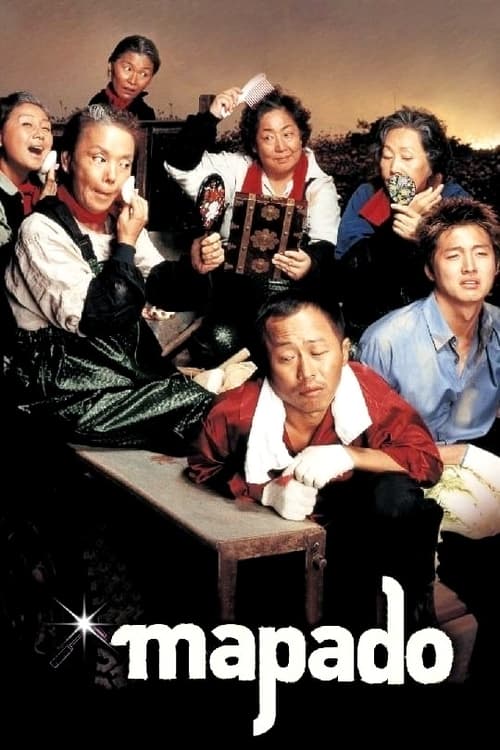
Mapado
2005
No user ratings available yet
Diversity score: 6.5 out of 10

2003
Director
Song Gyeong-sik
Runtime
108 minutes
Average Rating
No ratings yetSynopsis
Eun-bi, an orphaned girl who works as a prostitute, is moved to action when her prostitute friend is brutally gang raped and the police do nothing because her friend was a prostitute. Deciding to run for Korea's parliament, she runs into mob coercion and deception along with way. This movie is a funny but insightful satire of the corruption of Korean elections.
Overall Score
Good
Category Breakdown
LGBTQ+ Representation
The film lacks visible queer identities or non-heteronormative characters. The narrative focus remains centered on gendered violence and class-based marginalization rather than LGBTQ+ themes.
Gender Representation
The story subverts patriarchal norms by centering a female protagonist from a low-status social position. She acts as a primary agent of political change against male-dominated institutions.
Racial & Ethnic Diversity
As a domestic South Korean production, the film reflects the ethnic homogeneity of its setting. It focuses on internal social stratification and the marginalization of those on society's fringes.
Religious & Cultural Diversity
The film offers a biting critique of democratic institutions, portraying the police and election systems as corrupt. It uses satire to challenge traditional social hierarchies and systemic power.
Disability Representation
There are no documented depictions of physical or neurodivergent disabilities within the narrative.
Strengths
Areas for Improvement
AI Analysis
The film functions as a sharp social satire that uses a marginalized protagonist to deconstruct state institutions. It succeeds most prominently by subverting traditional gendered power dynamics and centering the agency of the disenfranchised. While the work provides a sophisticated critique of systemic corruption and political coercion, it lacks diversity in terms of LGBTQ+ and disability representation. The narrative is primarily concerned with class and gendered struggles within a localized Korean context. Ultimately, the film's progressive value stems from its refusal to uphold traditional social orders, instead prioritizing the voice of a character typically ignored by the state.
2005

1990

2022
2013

1975

1975

1997
1974

2003

1987

2010

2014
No reviews yet. Be the first to share your thoughts on this movie!
Use the rating form above to leave a star rating and optional review.